







When Coughing Becomes Difficult: How Cough Assist Devices Support Airway Clearance
Coughing is often taken for granted until a patient can no longer do it effectively. A normal cough requires more than a simple reflex. It depends on sufficient inspiratory volume, coordinated airway closure, respiratory muscle strength, and enough expiratory force to generate high airflow. When one or more of these functions are impaired, the body's ability to clear the airway can change significantly.
This problem is particularly important in people living with neuromuscular diseases, patients with a tracheostomy, and individuals recovering after critical illness or prolonged mechanical ventilation. For these groups, ineffective coughing may allow airway secretions to remain in the respiratory tract, increasing the difficulty of breathing management and potentially contributing to complications such as mucus plugging, atelectasis, and respiratory infection.
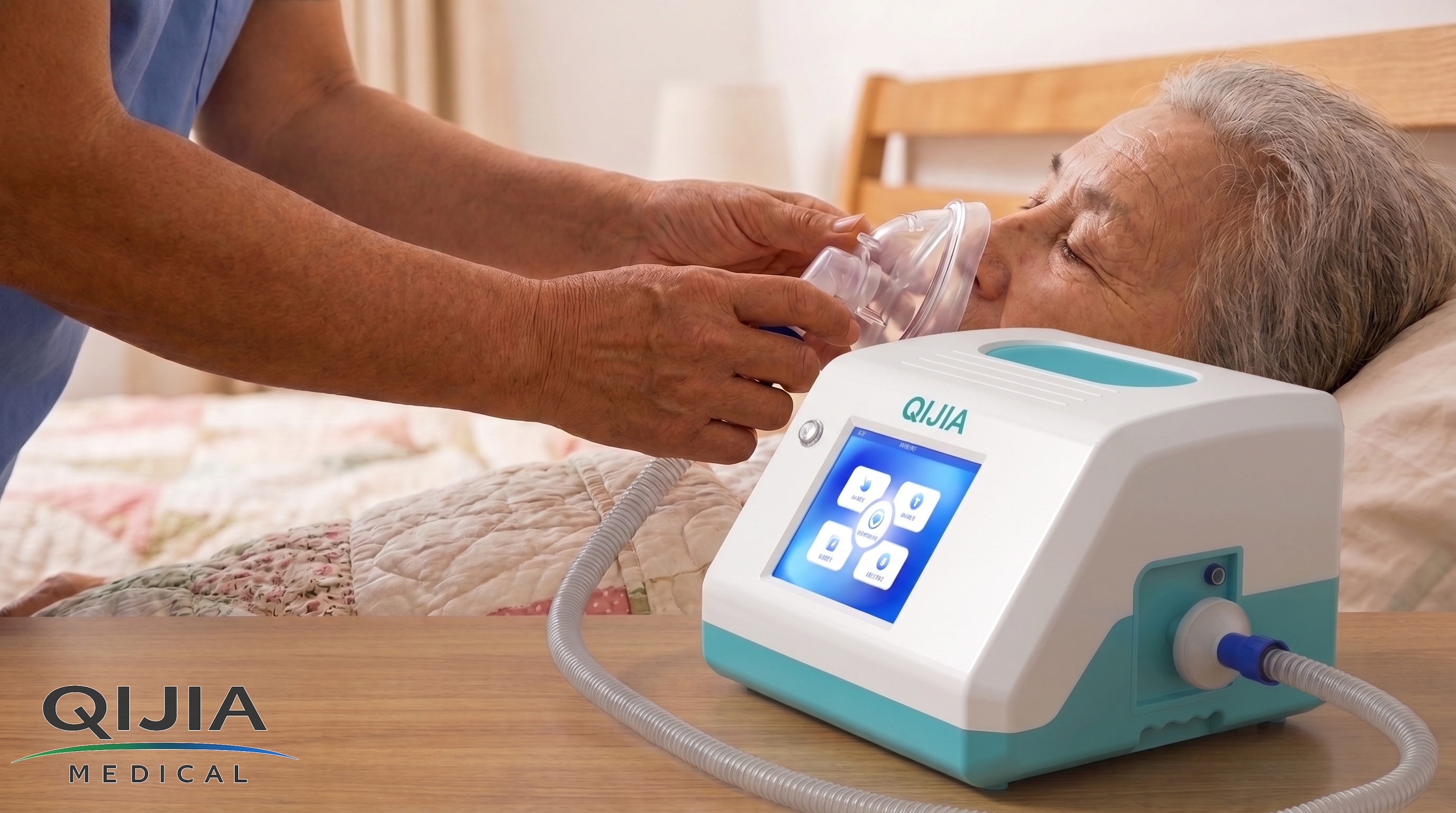
A Cough Assist Device uses Mechanical Insufflation-Exsufflation (MI-E) technology to provide mechanical support when a patient's own cough is insufficient. Instead of simply removing secretions from an accessible part of the airway, the device assists the airflow pattern involved in coughing by alternating positive and negative pressure.

Why an Ineffective Cough Deserves Early Attention
The ability to breathe independently does not necessarily mean that a person can cough effectively. A patient may maintain adequate spontaneous breathing while still lacking the strength required to produce an efficient cough.
This distinction is important in respiratory care. When secretions accumulate faster than the patient can clear them, the airway can become increasingly difficult to manage. A partial blockage may reduce ventilation in affected areas of the lungs, while retained secretions can create an environment in which respiratory complications become more likely.
The situation may become more serious during an acute respiratory infection. Increased secretion production combined with reduced cough strength can create a cycle in which the patient becomes increasingly fatigued while becoming less capable of clearing the airway independently.
For this reason, cough effectiveness should be considered as part of respiratory assessment rather than being judged only by whether a patient is able to cough at all.
Neuromuscular Disease: When Breathing Muscles Gradually Lose Strength
Neuromuscular diseases can change respiratory function over time. Conditions such as Amyotrophic Lateral Sclerosis (ALS), Spinal Muscular Atrophy (SMA), muscular dystrophy, and other disorders affecting muscle strength may weaken the muscles involved in inspiration and forced expiration.
A weaker respiratory muscle system can reduce the force of a voluntary cough. Even when a patient understands how to cough and has an intact cough reflex, the physical strength needed to generate sufficient airflow may no longer be available.
This is one reason respiratory management in neuromuscular disease extends beyond ventilation alone. Maintaining an open airway and having an effective strategy for secretion clearance are also important considerations.
Where Mechanical Cough Assistance Fits
Clinical guidance suggests considering mechanical insufflation-exsufflation for selected patients with neuromuscular disease whose cough effectiveness remains inadequate despite other appropriate techniques. The goal is not to treat the underlying neuromuscular disorder, but to provide additional mechanical assistance to a respiratory function that has become impaired.
A Cough Assist Device can deliver a deeper insufflation followed by a rapid exsufflation. The pressure transition creates outward airflow designed to assist the movement of secretions toward the central airway, where they can then be cleared using an appropriate cough or other prescribed method.
This approach can be particularly relevant when respiratory muscle weakness makes repeated forceful coughing tiring or ineffective.
Tracheostomy Care: Managing the Difference Between Airway Access and Airway Clearance
A tracheostomy creates a direct airway access point, but having an artificial airway does not automatically guarantee effective secretion clearance. Patients with a tracheostomy may still have weak respiratory muscles, impaired cough coordination, or reduced ability to generate sufficient expiratory flow.
Airway suctioning remains an important clinical technique in appropriate situations. However, suctioning and mechanical cough assistance address different aspects of respiratory care. Suction can remove secretions that are accessible to the catheter, while mechanical insufflation-exsufflation works by changing airway pressure and airflow to assist the coughing process.
For selected tracheostomy patients, mechanical cough assistance may therefore be incorporated into a broader secretion-management strategy. Depending on the patient's condition and clinical setup, treatment may be delivered through an appropriate mask or a tracheostomy connection.
The interaction between the artificial airway, cuff status, airway diameter, respiratory muscle function, and pressure settings should be considered by the clinical team. Treatment should never be standardized simply because two patients have the same type of tracheostomy.

After Mechanical Ventilation: Why Cough Strength May Not Return Immediately
Leaving mechanical ventilation can be an important milestone, but respiratory recovery does not necessarily happen all at once. After prolonged critical illness, patients may experience general weakness, respiratory muscle deconditioning, fatigue, or reduced coordination of breathing and coughing.
A patient who has regained spontaneous breathing may therefore still have difficulty generating a productive cough. This can become especially relevant when secretions increase during the recovery period.
During post-extubation or post-ICU rehabilitation, healthcare professionals may evaluate several factors, including respiratory muscle performance, oxygenation, secretion burden, cough effectiveness, and the patient's ability to cooperate with airway clearance techniques.
For appropriately selected patients, mechanical insufflation-exsufflation can provide an additional method of cough assistance when conventional techniques do not provide sufficient results. It may be used as part of a broader respiratory rehabilitation program rather than as a standalone solution.
From a Weak Cough to a More Structured Airway Management Strategy
The most important question is not simply whether a patient coughs. The more useful question is whether the cough is strong and coordinated enough to accomplish its intended purpose.
A structured respiratory assessment may consider:
Whether the patient can take an adequate breath before coughing.
Whether sufficient expiratory force can be generated.
Whether airway secretions are increasing or becoming difficult to manage.
Whether coughing causes excessive fatigue.
Whether manual or other airway-clearance techniques are effective.
Whether mechanical cough assistance is clinically appropriate.
When a patient's natural cough cannot adequately clear secretions, mechanical assistance can provide another tool for the healthcare team. Current clinical guidance for neuromuscular weakness and spinal cord injury supports considering MI-E when cough effectiveness is insufficient and other appropriate techniques do not adequately address secretion clearance.
How Mechanical Insufflation-Exsufflation Works
A Cough Assist Device is designed around a simple but controlled pressure sequence.
Positive-pressure insufflation: Air is delivered into the lungs to increase inspiratory volume.
Rapid pressure transition: The device changes from positive pressure toward negative pressure.
Negative-pressure exsufflation: The resulting outward airflow assists the expiratory phase of a cough.
The objective is to reproduce important airflow characteristics of an effective cough while reducing the amount of respiratory muscle effort required from the patient.
QIJIA MEDICAL's Cough Assist Device provides adjustable inspiratory pressure, expiratory pressure, and treatment time. These parameters allow healthcare professionals to configure the device according to the patient's prescribed treatment requirements and tolerance.
Why Patient-Specific Assessment Matters
Mechanical cough assistance is not appropriate for every patient with a cough problem. Pressure-based respiratory therapies require proper patient selection and clinical supervision.
Certain conditions may require particular caution or may represent contraindications depending on the clinical situation, including untreated pneumothorax, some forms of barotrauma, tracheoesophageal fistula, and certain acute neurological or cardiovascular conditions.
For this reason, healthcare professionals should evaluate the patient's medical history, respiratory condition, airway status, and ability to tolerate the treatment before establishing a therapy protocol.
Caregivers should also receive appropriate training when mechanical cough assistance is incorporated into long-term care. Correct interface placement, prescribed pressure settings, treatment timing, equipment maintenance, and recognition of respiratory deterioration are all important parts of responsible use.
A Respiratory Care Solution for Healthcare Providers
As respiratory care becomes increasingly integrated across hospitals, rehabilitation facilities, long-term care, and selected home-care environments, healthcare providers need equipment that can adapt to different patient-management requirements.
A Cough Assist Device can serve as one component within a broader airway-clearance strategy for patients with ineffective cough. Its value lies not simply in generating pressure, but in providing controlled mechanical assistance to a physiological function that may otherwise be difficult for the patient to perform.
QIJIA MEDICAL develops respiratory care and rehabilitation equipment for healthcare providers, distributors, and medical partners worldwide. Our product portfolio combines practical clinical applications with manufacturing and customization capabilities.
For more information about our respiratory care solutions, visit theCough Assist Device product page.
For distributors and healthcare organizations interested in OEM or ODM cooperation, learn more aboutQIJIA MEDICAL's manufacturing and cooperation capabilities.
For product specifications, distribution opportunities, or OEM/ODM inquiries, pleasecontact QIJIA MEDICAL.
Frequently Asked Questions
1. What is a Cough Assist Device?
A Cough Assist Device is a mechanical insufflation-exsufflation system designed to assist coughing in patients who cannot generate an effective cough independently. It alternates positive and negative airway pressure to create airflow that supports secretion clearance.
2. Who may benefit from mechanical cough assistance?
It may be considered for selected patients with significantly reduced cough effectiveness, including some people with neuromuscular diseases, certain tracheostomy patients, and patients recovering from severe illness. Suitability should be determined by a qualified healthcare professional.
3. Can a Cough Assist Device be used with a tracheostomy?
Mechanical cough assistance can be delivered through an appropriate tracheostomy connection in selected patients. The clinical team should determine the appropriate interface, settings, and treatment protocol based on the patient's airway and respiratory condition.
4. Is a Cough Assist Device the same as a suction machine?
No. Suction and mechanical cough assistance use different approaches. Suction physically removes accessible secretions, while MI-E assists the airflow pattern of coughing to help move secretions toward the central airway.
5. Can mechanical cough assistance be useful after mechanical ventilation?
Some patients recovering from prolonged mechanical ventilation may have reduced cough effectiveness. After clinical assessment, mechanical cough assistance may be incorporated into an airway-clearance or respiratory rehabilitation program when appropriate.
6. Can the QIJIA Cough Assist Device settings be adjusted?
Yes. The QIJIA MEDICAL Cough Assist Device provides adjustable inspiratory pressure, expiratory pressure, and treatment time. The appropriate settings should be determined by trained healthcare professionals.
7. Can a Cough Assist Device be used at home?
Selected patients may use mechanical cough assistance in a home-care setting when it forms part of an appropriate clinical plan. Professional assessment, caregiver training, prescribed settings, and regular follow-up are important for safe use.
8. Does a Cough Assist Device treat the underlying disease?
No. Mechanical cough assistance supports the specific function of coughing and airway secretion clearance. It does not treat or cure the underlying neurological, muscular, respiratory, or other medical condition.
QIJIA MEDICAL — Connecting healthcare solutions worldwide.