







How to Evaluate an Airway Clearance System for Clinical Use
Effective airway secretion management is an important part of respiratory care for selected patients who have difficulty clearing secretions from their airways. In hospitals, rehabilitation facilities, respiratory clinics, and other care environments, choosing an appropriate airway clearance system requires more than comparing product specifications or purchasing costs. Clinical suitability, patient safety, usability, maintenance requirements, and long-term treatment adherence all deserve careful consideration.
When retained secretions are not adequately cleared, they may contribute to airway obstruction, persistent respiratory symptoms, impaired ventilation, and recurrent respiratory complications in susceptible patients. However, airway clearance equipment is not suitable for everyone, and different technologies work through different mechanisms. Selecting the wrong approach or using a device without appropriate clinical assessment may expose patients to unnecessary discomfort or risk while delaying more suitable care.
This guide explains the key factors healthcare providers, distributors, and medical equipment procurement teams should consider when evaluating an airway clearance system for clinical use, with a focus on high-frequency chest wall oscillation (HFCWO) technology.
1. Understand the Clinical Need Before Selecting a Device
The first step in evaluating an airway clearance system is to identify the clinical problem it is intended to address. Not every patient with a respiratory diagnosis has difficulty clearing airway secretions, and not every patient who coughs requires mechanical airway clearance therapy.
Patients with conditions such as bronchiectasis, cystic fibrosis, or certain neuromuscular disorders may experience impaired secretion clearance. Some individuals with other respiratory conditions may also benefit from a targeted airway clearance strategy when retained secretions are a significant clinical concern. The appropriate approach depends on the patient's condition, cough effectiveness, secretion burden, functional ability, and overall treatment plan.
Questions to ask during clinical assessment
Does the patient have difficulty mobilizing or clearing airway secretions?
Is secretion retention contributing to respiratory symptoms or functional limitations?
Can the patient perform conventional airway clearance techniques effectively?
Would a mechanical device address a specific limitation in the current care plan?
What measurable treatment goals should be used to assess whether the selected method is helping?
These questions help prevent unnecessary equipment use. Routine airway clearance treatment should not be assumed to benefit every postoperative patient, every person with COPD, or every individual undergoing pulmonary rehabilitation. A qualified healthcare professional should determine whether airway clearance therapy is indicated and which technique is appropriate.
2. Evaluate Patient Safety and Potential Risks
Patient safety should be a central part of equipment evaluation, not an issue considered only after a device has been purchased. Mechanical airway clearance systems apply physical forces to help mobilize secretions, so the patient's medical condition and ability to tolerate the selected treatment must be considered before use.
Screen for contraindications and precautions
For high-frequency chest wall oscillation systems, clinicians should carefully assess conditions that may make external chest wall vibration unsuitable or require additional precautions. Examples may include unstable chest wall injuries, rib fractures, untreated pneumothorax, active significant hemoptysis, recent thoracic or abdominal surgery, severe osteoporosis, or hemodynamic instability. The relevance of each condition depends on the clinical circumstances and the device's instructions for use.
This list is not exhaustive and should not be used as a substitute for professional assessment. Healthcare providers must review the manufacturer's instructions, relevant clinical guidance, and the patient's individual risk factors before initiating treatment.
Monitor tolerance during treatment
Even when airway clearance therapy is considered appropriate, some patients may experience discomfort, chest wall pain, shortness of breath, fatigue, or changes in oxygen saturation. In susceptible individuals, treatment may also aggravate respiratory symptoms. Incorrect settings, poor fit, or failure to reassess the patient can make treatment less tolerable.
Clinical teams should establish a suitable starting protocol, adjust treatment according to the patient's response, and monitor for adverse symptoms. If the patient develops significant pain, worsening breathlessness, unexpected oxygen desaturation, or other concerning symptoms, treatment should be stopped and the patient assessed according to the facility's clinical procedures.
Key consideration: A device with adjustable settings can support individualized treatment, but adjustability does not replace clinical judgment. The selected settings and treatment duration must follow professional guidance and the manufacturer's instructions.
3. Understand the Technology: HFCWO and Other Airway Clearance Methods
Airway clearance is not a single technology. Different methods address secretion management through different mechanisms, and they should not be treated as interchangeable.
Manual chest physiotherapy: Uses techniques such as percussion, positioning, and breathing guidance delivered by a trained caregiver or clinician.
Positive expiratory pressure (PEP): Uses resistance during exhalation to support airflow and secretion mobilization in appropriately selected patients.
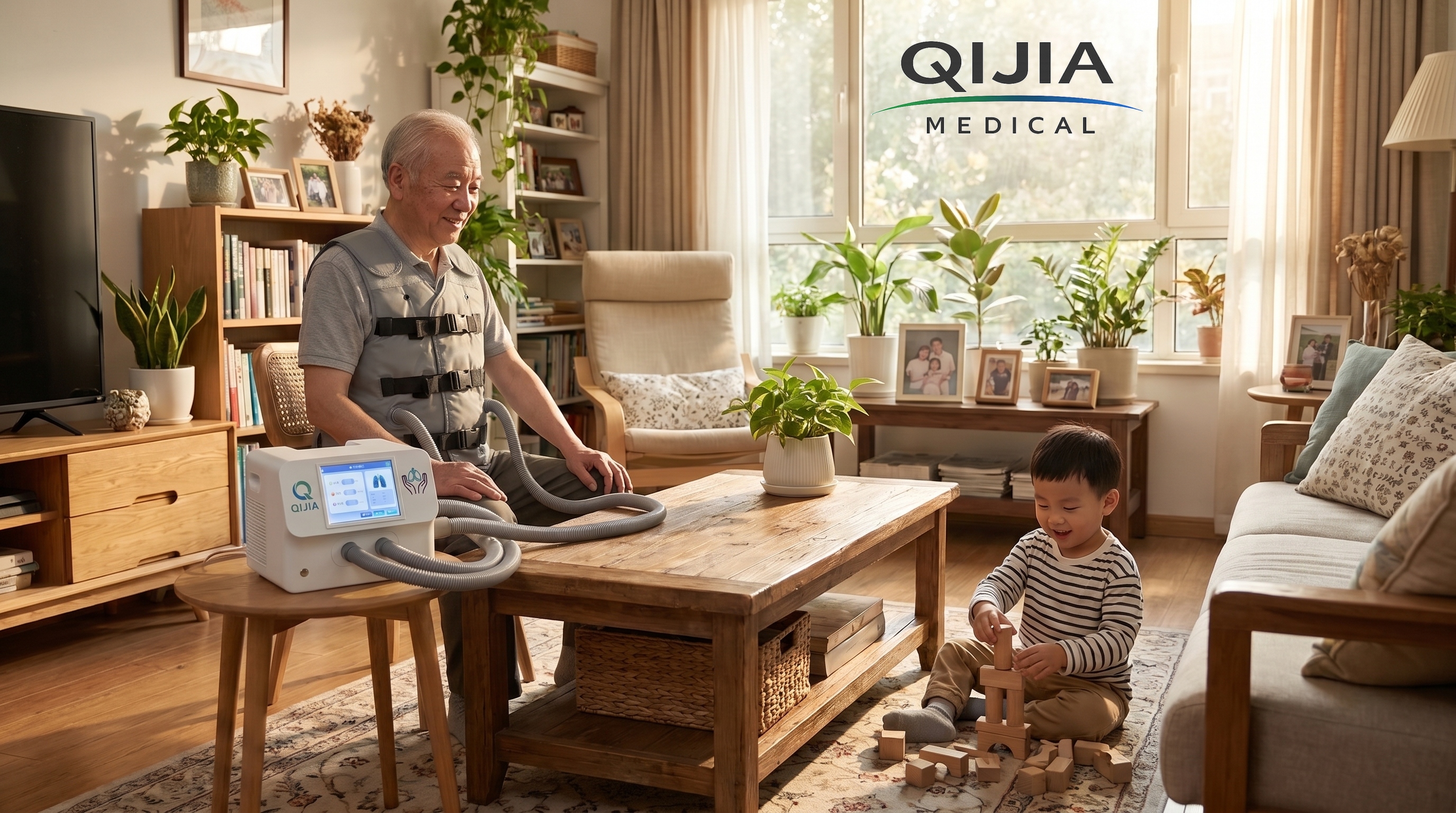
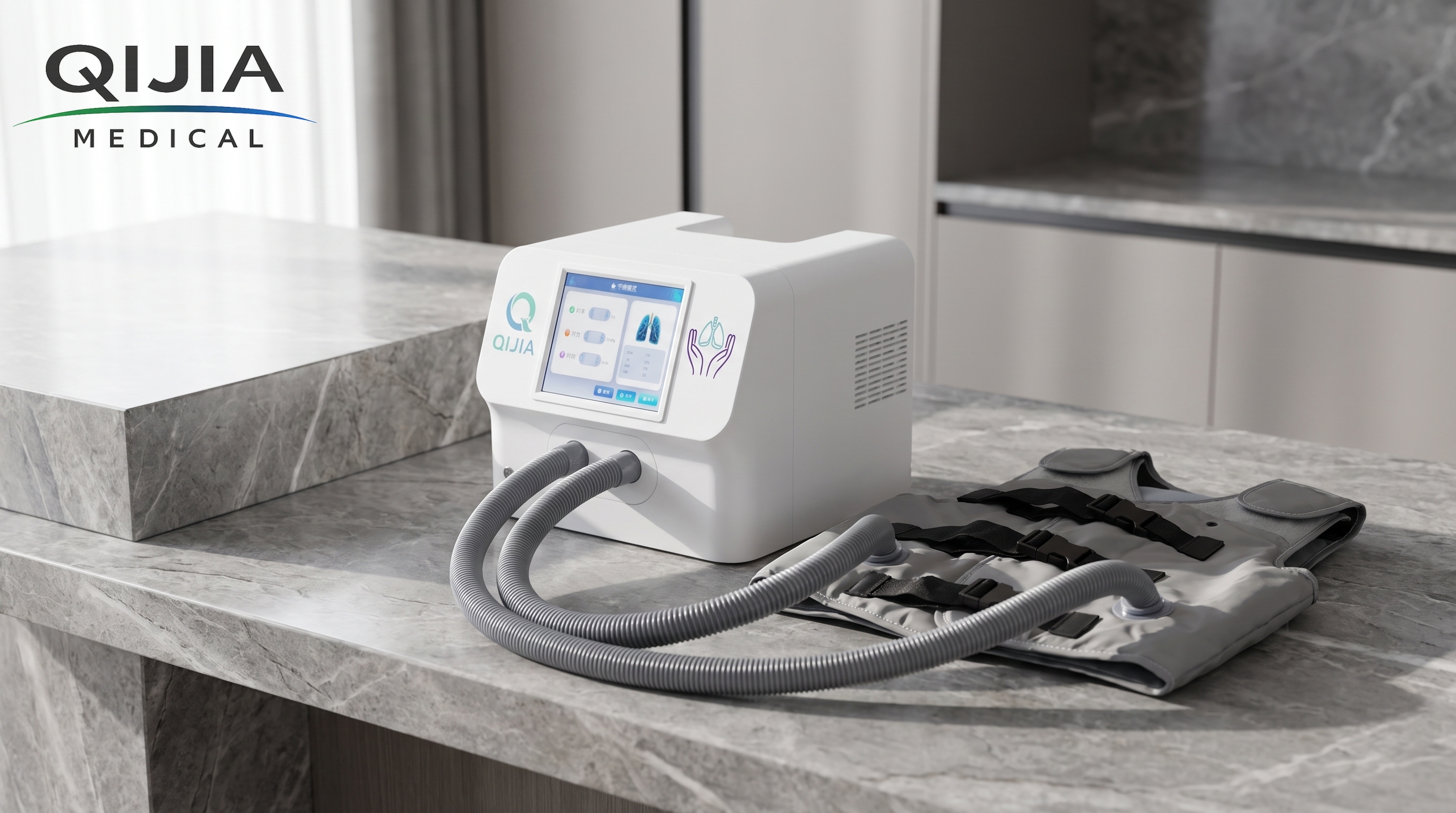
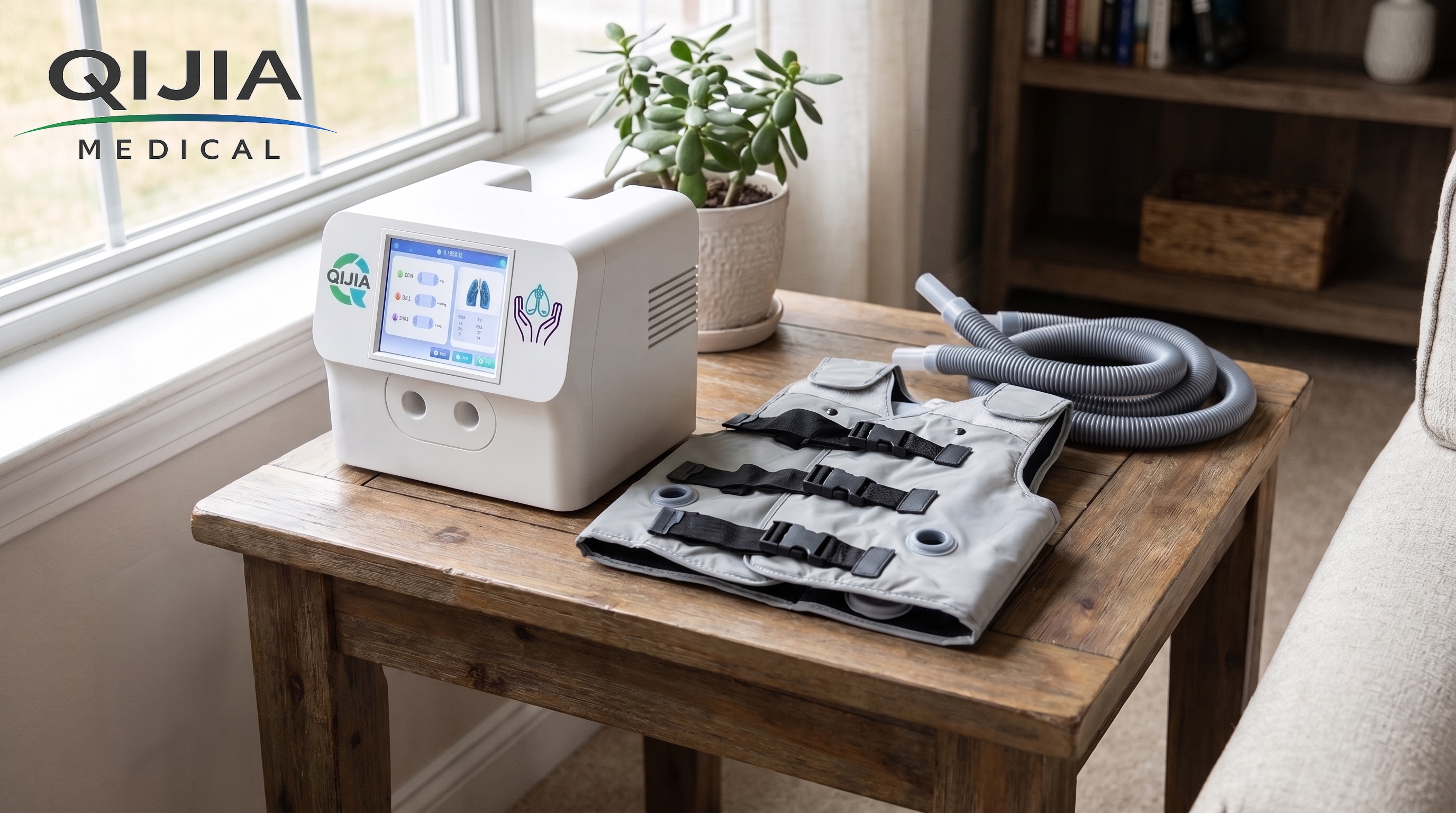
High-frequency chest wall oscillation (HFCWO): Uses an inflatable vest connected to an air-pulse generator to produce repeated chest wall oscillations that may help mobilize airway secretions.
Mechanical insufflation-exsufflation (cough assist): Uses positive and negative pressure to assist coughing in selected patients with an ineffective cough. It serves a different function from HFCWO.
When evaluating equipment, buyers should first confirm which clinical function is required. An HFCWO system is designed to help mobilize secretions; it does not automatically replace an effective cough, suction when clinically required, or a cough-assist device for a patient who cannot generate adequate expiratory flow.
No single airway clearance technique is best for every patient. The choice should consider clinical evidence, patient response, available alternatives, staff expertise, and the treatment goals defined by the healthcare team.
4. Check Treatment Adjustability and Control Functions
Once the intended clinical application is established, the next step is to review whether the device's controls support the planned treatment protocol. For HFCWO equipment, important considerations may include adjustable oscillation frequency, pressure or intensity control, treatment duration, and a clear method for changing settings.
These functions matter because patient tolerance and clinical requirements vary. A setting that is comfortable for one individual may be unsuitable for another. Clear controls can also help trained staff deliver a consistent protocol and document how treatment was performed.
What should clinical teams examine?
Parameter clarity: Are settings clearly displayed and easy for trained staff to understand?
Adjustment range: Does the available range support the intended clinical protocol without encouraging use beyond approved instructions?
Session control: Can staff set and monitor treatment duration appropriately?
Ease of operation: Can users understand the controls after suitable training?
Consistency: Can staff reproduce the prescribed settings and record treatment details accurately?
Procurement teams should verify the actual specifications of the model under consideration rather than assume that every HFCWO system offers the same settings or functions. Clinical teams should also confirm that available parameters align with the device's approved labeling and the intended use in their facility.
5. Assess Vest Fit, Patient Comfort, and Practical Usability
For an HFCWO airway clearance system, the inflatable vest is an essential part of the treatment interface. Its fit, adjustability, connection design, and ease of handling can influence the practical delivery of therapy.
A poorly fitting vest may reduce comfort, make positioning difficult, or interfere with consistent treatment delivery. A patient who finds the equipment uncomfortable or difficult to use may also be less willing to complete the prescribed sessions. This can undermine the intended treatment plan even when the device itself functions correctly.
During evaluation, healthcare providers should consider:
Whether the available vest sizes and fit options are appropriate for the intended patient population.
Whether the vest can be fitted and removed safely by trained staff or designated caregivers.
Whether the tubing connections are secure and straightforward to inspect.
Whether the patient can maintain a suitable position during treatment.
Whether the equipment's noise, bulk, and session requirements are manageable in the intended care setting.
Patient comfort should not be treated as a minor purchasing detail. It is part of the overall usability assessment and may influence whether the prescribed treatment can be followed consistently.
6. Consider Workflow in Hospitals, Clinics, and Rehabilitation Facilities
A device that works well for an individual patient must also fit the practical needs of the care environment. In hospitals and rehabilitation facilities, staff time, equipment storage, cleaning procedures, patient turnover, and training requirements all affect the long-term value of a medical device.
Before purchasing an airway clearance system, clinical managers and procurement teams should consider how it will be incorporated into daily workflows.
Operational questions to review
Can staff set up the system without unnecessary delays?
Are the controls and operating instructions clear enough to support standardized training?
Can the vest and reusable components be cleaned or disinfected according to the manufacturer's instructions?
Are routine inspection and maintenance procedures clearly documented?
Is there an appropriate process for reporting faults and removing malfunctioning equipment from service?
Can the facility access replacement parts, technical support, and user documentation when needed?
Cleaning deserves particular attention when equipment is shared between patients. Facilities should follow the manufacturer's specified cleaning and disinfection procedures, paying attention to which components are reusable, which components require replacement, and which cleaning agents are permitted. Improper cleaning may create infection-control concerns or damage the equipment.
7. Define How Treatment Effectiveness Will Be Evaluated
Purchasing a device is not the same as demonstrating that it benefits a particular patient. Before treatment begins, the clinical team should define the intended goals and how progress will be reviewed.
Depending on the patient's condition, relevant measures may include:
The patient's ability to mobilize and clear secretions.
Changes in reported respiratory symptoms or ease of expectoration.
Tolerance of the treatment session and completion of the prescribed protocol.
Changes in relevant clinical observations selected by the treating team.
Adherence to the treatment plan and the need for additional airway clearance support.
These measures should be interpreted in the context of the patient's overall condition. The amount of secretion produced during a single session is not, by itself, proof of long-term clinical benefit. Similarly, changes in symptoms cannot always be attributed to one device when other treatments are being provided at the same time.
Clinical teams should reassess whether the selected technique is meeting its intended goals. If treatment is ineffective, poorly tolerated, or no longer appropriate, the care plan may need to be adjusted. Continuing an unsuitable intervention without reviewing its value can waste staff time, increase patient burden, and delay a more appropriate approach.
8. Review Maintenance, Training, and After-Sales Support
Medical equipment evaluation should extend beyond the initial demonstration. Long-term operation depends on suitable maintenance arrangements, accessible technical documentation, and a clear process for handling equipment problems.
For an HFCWO system, buyers may wish to verify the following before procurement:
Documentation: Are the operating instructions, safety warnings, and maintenance requirements available?
Training: Can the supplier provide appropriate product training for the intended users?
Inspection: Are routine checks for tubing, vest condition, connectors, and the main unit clearly described?
Service: Is there a defined process for technical inquiries, troubleshooting, and repairs?
Parts availability: Can compatible replacement components be obtained when required?
Regulatory documentation: Can the supplier provide relevant documentation for the specific model and target market?
Suppliers should provide accurate information about the device they offer. Healthcare providers and importers should independently verify applicable regulatory requirements, product labeling, and registration obligations in their destination markets. A general statement about certifications should not replace review of the documentation applicable to the exact product and jurisdiction.
9. Compare Total Cost and Long-Term Value
The lowest purchase price does not necessarily represent the best value. An airway clearance system may involve costs beyond the main unit, including vest options, replacement components, staff training, maintenance, cleaning supplies, and service support.
A structured comparison should consider:
Initial equipment and accessory costs.
Expected maintenance and replacement-part requirements.
Staff time needed for setup, treatment support, and cleaning.
Training and technical support arrangements.
Suitability for the facility's intended patient population and workflow.
Whether the system offers the functions actually required by the clinical team.
It is also important to avoid paying for features that do not address the facility's needs. A practical evaluation should balance clinical suitability, safety, usability, serviceability, and cost rather than relying on a single specification or marketing claim.
10. Questions to Ask an Airway Clearance System Supplier
For hospitals, rehabilitation centers, distributors, and medical equipment importers, a consistent supplier-evaluation checklist can make purchasing decisions more transparent.
What is the device's intended use, and which patients is it designed to support?
What are the model's actual operating parameters and available accessories?
What safety precautions, contraindications, and monitoring requirements are included in the instructions for use?
What training and technical documentation are available?
What are the cleaning, inspection, and maintenance requirements?
Which replacement parts and after-sales services are available?
Can the supplier provide the regulatory and quality documentation required for the target market?
For OEM/ODM projects, what customization options, technical specifications, quality-control processes, and documentation can be discussed?
Clear answers help buyers determine whether the device and supplier are appropriate for their clinical, operational, and commercial requirements. They also help avoid decisions based on incomplete specifications or unsupported claims.
11. Explore the QIJIA MEDICAL HFCWO Airway Clearance System
For healthcare organizations and medical equipment distributors evaluating mechanical airway clearance solutions, QIJIA MEDICAL offers an HFCWO Airway Clearance System that uses an inflatable vest connected to a main unit through tubing. The system generates repeated pneumatic chest wall oscillations designed to help mobilize airway secretions in appropriately selected patients.
As with any medical device, the suitability of an HFCWO system should be determined according to the patient's clinical needs, relevant precautions, and the instructions for the specific model. The system should be considered as part of an individualized airway clearance plan rather than a universal replacement for other respiratory care methods.
To review the product and its available information, visit the QIJIA MEDICAL HFCWO Airway Clearance System product page.
Medical equipment distributors and organizations interested in OEM/ODM cooperation can learn more about QIJIA MEDICAL and its manufacturing capabilities. For product specifications, distribution inquiries, or further information, please contact the QIJIA MEDICAL team.
Conclusion
Evaluating an airway clearance system for clinical use requires a balanced review of patient suitability, safety precautions, treatment controls, comfort, workflow, measurable outcomes, maintenance, and total cost. The most appropriate device is not necessarily the one with the most features or the lowest price, but the one that meets a defined clinical need and can be used safely and consistently within the intended care environment.
For healthcare providers, careful assessment helps reduce avoidable treatment risks and supports more informed clinical decisions. For procurement teams and distributors, a structured evaluation process provides a clearer basis for comparing products and suppliers. By combining clinical judgment with practical equipment assessment, organizations can make more responsible decisions about airway clearance technology.
Frequently Asked Questions (FAQ)
1. What is an airway clearance system used for?
An airway clearance system is used to help mobilize and clear airway secretions in appropriately selected patients who have difficulty clearing them naturally. The appropriate device and treatment approach depend on the patient's condition and clinical assessment.
2. What is an HFCWO airway clearance system?
HFCWO stands for high-frequency chest wall oscillation. An HFCWO system typically uses an inflatable vest connected to an air-pulse generator to produce repeated chest wall oscillations that may help mobilize airway secretions.
3. Is an HFCWO device suitable for every patient with a respiratory condition?
No. Not every patient with a respiratory diagnosis needs mechanical airway clearance. A qualified healthcare professional should evaluate secretion retention, cough effectiveness, medical history, potential contraindications, and alternative techniques before selecting a treatment method.
4. What safety factors should be considered before HFCWO treatment?
Clinicians should review the patient's medical history, chest wall condition, recent surgeries, bleeding symptoms, hemodynamic stability, and other relevant risks. They should also follow the specific device's instructions for use and monitor patient tolerance during treatment.
5. How can a clinical team assess whether an airway clearance system is effective?
The team should establish treatment goals before use and reassess patient tolerance, secretion clearance, relevant symptoms, adherence, and other clinically appropriate measures. Results should be interpreted in the context of the patient's overall care plan rather than relying on a single observation.
6. What should hospitals consider when purchasing an airway clearance system?
Important factors include clinical suitability, safety information, parameter controls, vest fit, ease of operation, cleaning and maintenance requirements, staff training, technical support, replacement parts, regulatory documentation, and total cost of ownership.
7. Can an HFCWO system replace a cough-assist device?
Not automatically. HFCWO is designed to help mobilize secretions, while a cough-assist device uses positive and negative pressure to assist coughing in selected patients. They serve different functions, and the appropriate approach depends on the patient's needs and clinical plan.
8. Does QIJIA MEDICAL provide OEM/ODM cooperation for medical equipment?
Organizations interested in OEM/ODM cooperation can review the QIJIA MEDICAL company page and contact the team to discuss project requirements, available options, and relevant product documentation.