







High-Frequency Chest Wall Oscillation: How Does HFCWO Help Mobilize Airway Secretions?
Airway secretions serve an important protective function. Under normal conditions, mucus traps inhaled particles and microorganisms, while the respiratory system continuously transports these secretions toward the throat for removal. However, when mucus accumulates faster than the body can clear it, this natural defense mechanism can become a clinical problem.
For patients with chronic respiratory diseases, impaired cough strength, neuromuscular disorders, or prolonged respiratory support, retained secretions may contribute to airway obstruction, impaired ventilation, and other respiratory complications. In some cases, a mucus plug can partially or completely block an airway, preventing adequate airflow to the affected lung region.
One technology developed to support secretion mobilization is High-Frequency Chest Wall Oscillation (HFCWO). By applying repeated mechanical oscillations through an inflatable vest, HFCWO helps mobilize mucus within the respiratory tract and supports the broader airway clearance process.
But how does this technology work? Why can retained mucus become dangerous? And what role can an HFCWO airway clearance system play in respiratory care?
1. Why Retained Airway Secretions Can Become a Serious Respiratory Problem
Mucus is not inherently harmful. It is a necessary component of the respiratory defense system. The problem begins when secretions become excessive, unusually thick, or difficult to move out of the airways.
This can happen in several clinical situations:
Chronic respiratory diseases: Conditions such as bronchiectasis and cystic fibrosis may involve excessive mucus production and impaired secretion clearance.
Neuromuscular disorders: Patients with weakened respiratory muscles may not generate a sufficiently strong cough to expel accumulated mucus.
Prolonged mechanical ventilation: Artificial airways bypass some of the upper respiratory tract's natural protective functions and may interfere with normal secretion clearance.
Reduced mobility and critical illness: Weakness, sedation, and limited physical activity can make effective coughing and secretion removal more difficult.
Respiratory inflammation or infection: Increased mucus production and changes in secretion properties can place additional demands on the airway clearance system.
When secretions are not effectively cleared, several complications may develop:
Mucus Plugging and Airway Obstruction
Thick or retained mucus can accumulate within the bronchial tree and form mucus plugs. Depending on their location and size, these plugs may partially or completely obstruct an airway. The result can be reduced airflow to the affected lung region and impaired ventilation.
Atelectasis and Impaired Gas Exchange
When an airway becomes obstructed, the air trapped beyond the blockage may gradually be absorbed. This can contribute to atelectasis, a condition in which part of the lung becomes collapsed or inadequately expanded. Extensive or persistent atelectasis may compromise oxygen exchange and increase the burden on the respiratory system.
Increased Respiratory Care Complexity
Retained secretions can make respiratory management more challenging, particularly in patients who already have limited respiratory reserves. They may require additional airway clearance interventions, closer monitoring, or more frequent secretion removal procedures.
For critically ill patients, secretion retention is an important clinical concern. However, its effects vary according to the patient's underlying condition, the degree of airway obstruction, and the effectiveness of the overall respiratory management plan.
2. What Is High-Frequency Chest Wall Oscillation (HFCWO)?
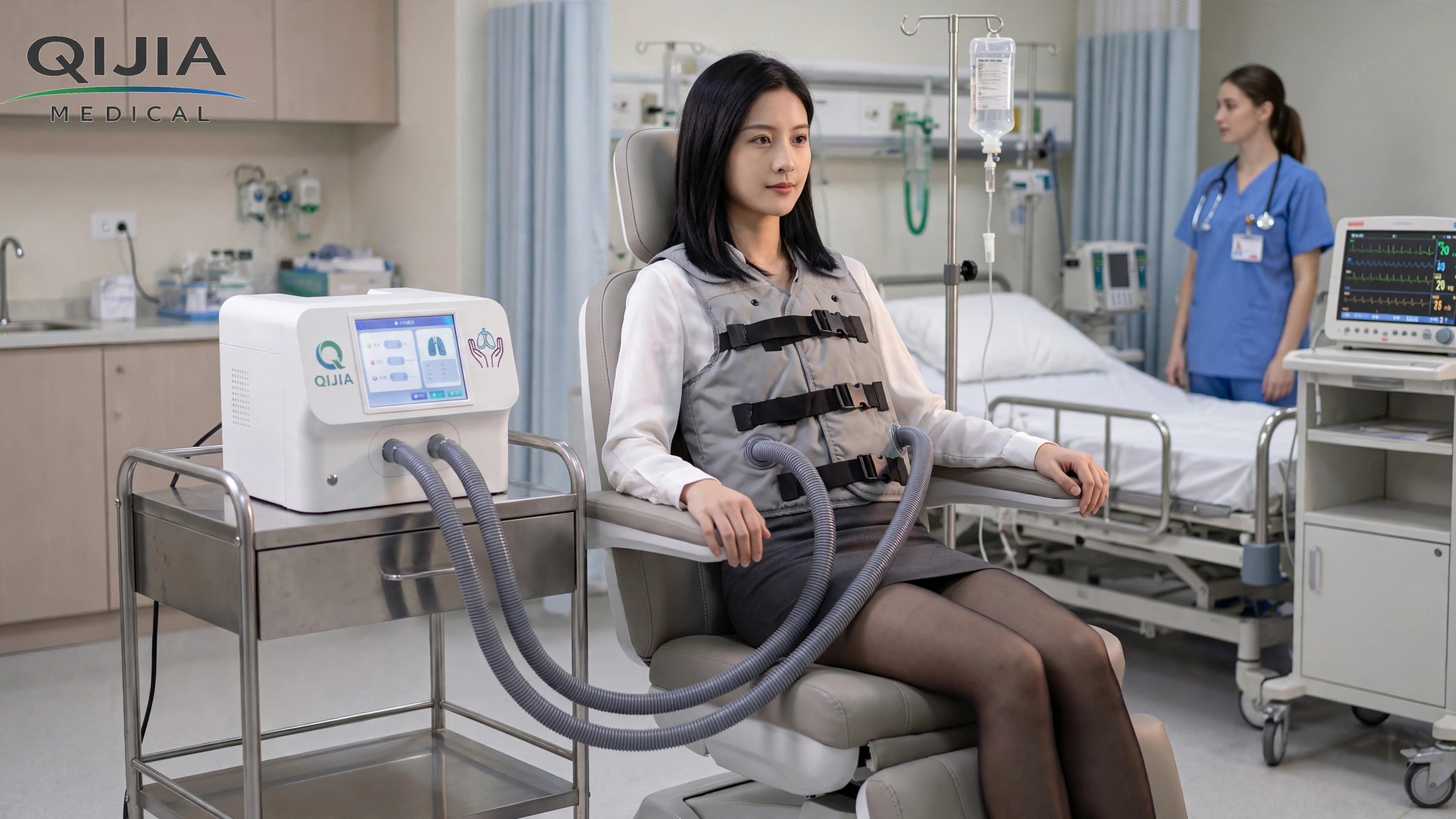
High-Frequency Chest Wall Oscillation is a mechanical airway clearance technique that applies rapid, repeated pressure changes to the chest wall. It is commonly delivered through an inflatable vest connected to an air pulse generator.
Unlike conventional manual chest percussion, which relies on a healthcare professional applying repeated movements by hand, an HFCWO system generates controlled oscillations through the vest. These oscillations are transmitted through the chest wall and influence airflow within the respiratory tract.
The central objective is not to suction mucus directly from the lungs. Instead, HFCWO is designed to help loosen and mobilize retained secretions, encouraging their movement from smaller peripheral airways toward larger airways where they can be more effectively removed.
3. How Does HFCWO Mobilize Airway Secretions?
The mechanism of HFCWO involves several interacting physical processes. Understanding these processes helps explain why chest wall oscillation can be useful as part of an airway clearance strategy.
Step 1: Repeated Inflation and Deflation Create Chest Wall Oscillations
During treatment, an air pulse generator delivers rapid pressure changes through connecting hoses to an inflatable vest worn around the patient's chest.
The vest repeatedly inflates and deflates, producing rhythmic external compressions and releases of the chest wall. These mechanical oscillations generate changes in thoracic pressure and airflow during breathing.
Because the oscillations are generated by the device, treatment can provide a consistent mechanical stimulus without requiring the patient to perform repeated manual chest percussion.
Step 2: Oscillatory Airflow Creates Shear Forces Around Mucus
One important principle behind HFCWO is the interaction between airflow and the mucus layer lining the airways.
Rapid changes in airflow can generate shear forces at the interface between air and mucus. These forces may help reduce the adhesion of secretions to airway walls and make retained mucus easier to mobilize.
HFCWO may also influence the physical properties of mucus, including its viscoelastic behavior. In practical terms, this means that oscillatory mechanical forces can help make secretions less difficult to move through the airway system.
Step 3: Secretions Are Encouraged to Move Toward Larger Airways
Effective airway clearance requires more than loosening mucus. The secretions must also move toward locations where they can be removed.
HFCWO generates repeated airflow changes that may favor the movement of mucus toward the central airways. This process is often described as proximal secretion mobilization.
Once secretions reach larger airways, they may be expelled through coughing or huffing. For patients who cannot cough effectively, assisted coughing or suctioning may be required, depending on their clinical condition.
Step 4: Mobilized Secretions Must Still Be Cleared
This is an essential point in understanding HFCWO technology: mobilizing mucus and removing mucus from the respiratory tract are related but different processes.
An HFCWO device helps loosen and move secretions. It does not function as a suction pump and does not independently guarantee that all mobilized mucus will be expelled.
For patients with weak cough strength, clinicians may need to combine HFCWO with other airway clearance methods, such as cough assistance, manual techniques, or suctioning. The appropriate combination depends on the patient's airway condition and ability to clear secretions.
4. Why Is HFCWO Different from Manual Chest Percussion?
Manual chest percussion and HFCWO share a broad objective: helping mobilize retained airway secretions. However, the way they deliver mechanical stimulation is different.
Manual chest percussion: A trained caregiver or healthcare professional applies repeated manual movements to the chest wall.
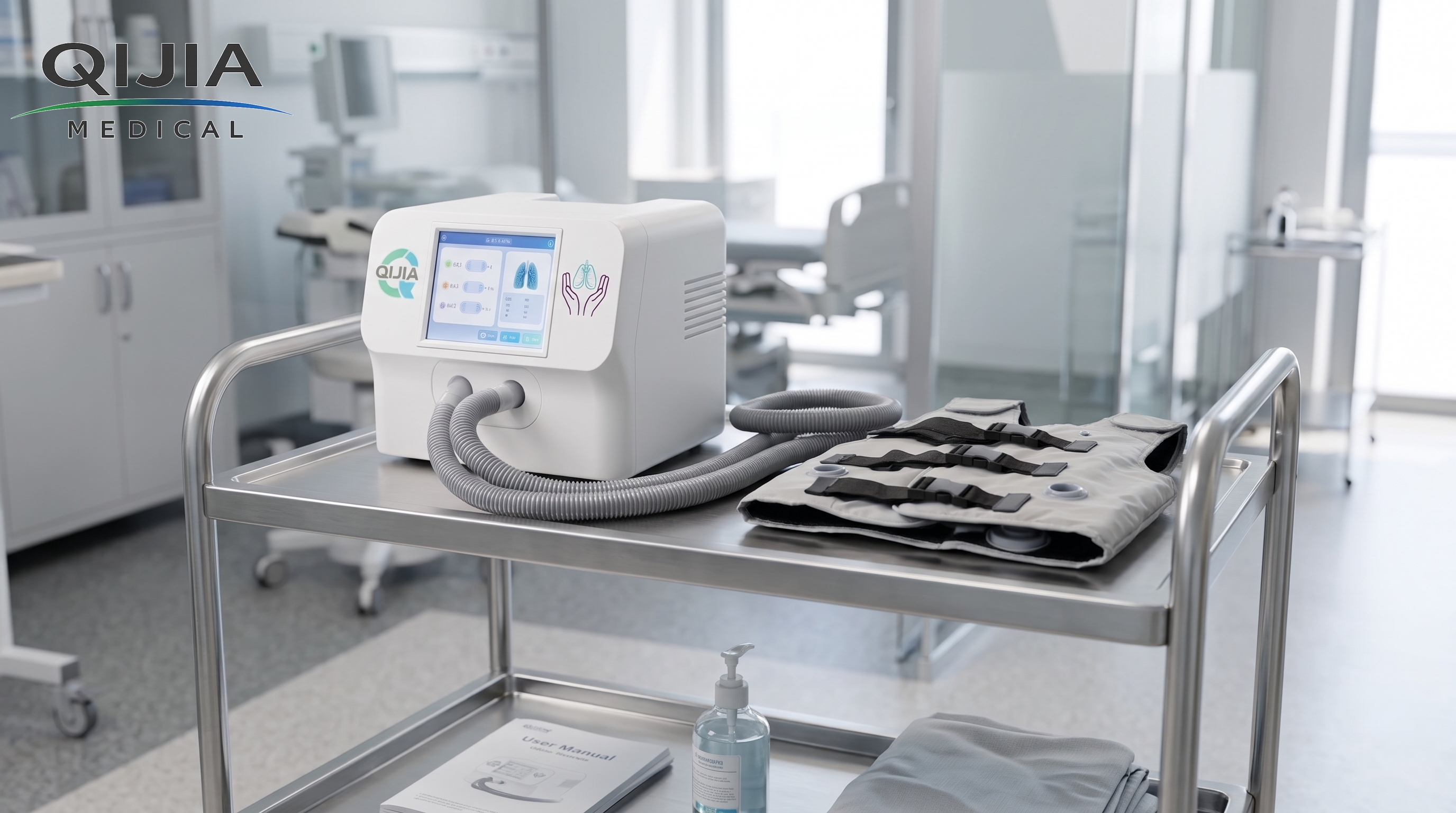
HFCWO: An inflatable vest connected to an air pulse generator delivers repeated mechanical oscillations through controlled inflation and deflation.
HFCWO offers a device-based approach to delivering repetitive chest wall oscillations. It can reduce reliance on continuous manual percussion during the oscillation phase and may be incorporated into an individualized airway clearance routine.
Nevertheless, it should not be considered universally superior to other airway clearance techniques. The most appropriate method depends on the patient's diagnosis, secretion characteristics, respiratory function, tolerance, and ability to cough effectively.
5. Which Patients May Benefit from HFCWO Airway Clearance Technology?
HFCWO is used in respiratory care for selected patients who experience excessive mucus production or difficulty clearing airway secretions. Clinical applications may include:
Patients with Bronchiectasis
Bronchiectasis can involve chronically damaged and widened airways, impaired mucus clearance, and recurrent respiratory infections. Retained secretions may contribute to a cycle of airway inflammation and infection. HFCWO may be considered as one option within an individualized airway clearance program.
Patients with Cystic Fibrosis
Thick, persistent airway mucus is a major respiratory challenge in cystic fibrosis. Airway clearance is an important part of long-term respiratory management, and HFCWO is one of the mechanical techniques used to help mobilize secretions.
Patients with Neuromuscular Disorders
Conditions affecting respiratory muscle strength can weaken the cough mechanism. Even when mucus is successfully mobilized, patients may struggle to expel it independently. HFCWO may help move secretions toward larger airways, but cough assistance or suctioning may also be necessary.
Selected Patients Requiring Intensive Respiratory Care
Critically ill patients may develop secretion retention due to sedation, weakness, artificial airways, or impaired cough effectiveness. This can contribute to airway obstruction and atelectasis.
HFCWO has been investigated as an additional secretion mobilization strategy in intensive care settings. However, the evidence for routine use in all ICU patients remains limited, and its effects on outcomes such as ventilation duration, ICU length of stay, and mortality are not yet conclusive. Patient selection and clinical supervision are therefore essential.
6. Clinical Considerations: HFCWO Must Be Used for the Right Patient
Although HFCWO provides a noninvasive mechanical approach to secretion mobilization, it is not suitable for every patient or every respiratory condition.
Before treatment, healthcare professionals should assess the patient's respiratory status, medical history, chest wall condition, secretion burden, and ability to clear mobilized mucus.
Particular caution or alternative treatment may be necessary in situations involving unstable chest injuries, active hemoptysis, significant hemodynamic instability, untreated pneumothorax, or other conditions in which external chest compression may be inappropriate.
Patients with severe airflow obstruction or a tendency toward airway collapse may also require careful assessment, since changes in intrathoracic pressure and expiratory airflow can have different effects depending on airway mechanics.
Treatment parameters, including pressure, frequency, and duration, should be selected according to the device instructions and the patient's clinical tolerance. HFCWO should be integrated into a broader respiratory care plan rather than used as a replacement for clinical assessment, appropriate humidification, cough assistance, or suctioning when indicated.
7. QIJIA MEDICAL: HFCWO Airway Clearance System for Respiratory Care
As a medical equipment manufacturer focused on respiratory care and rehabilitation technology, QIJIA MEDICAL develops equipment designed to support healthcare professionals and medical equipment distributors in different markets.
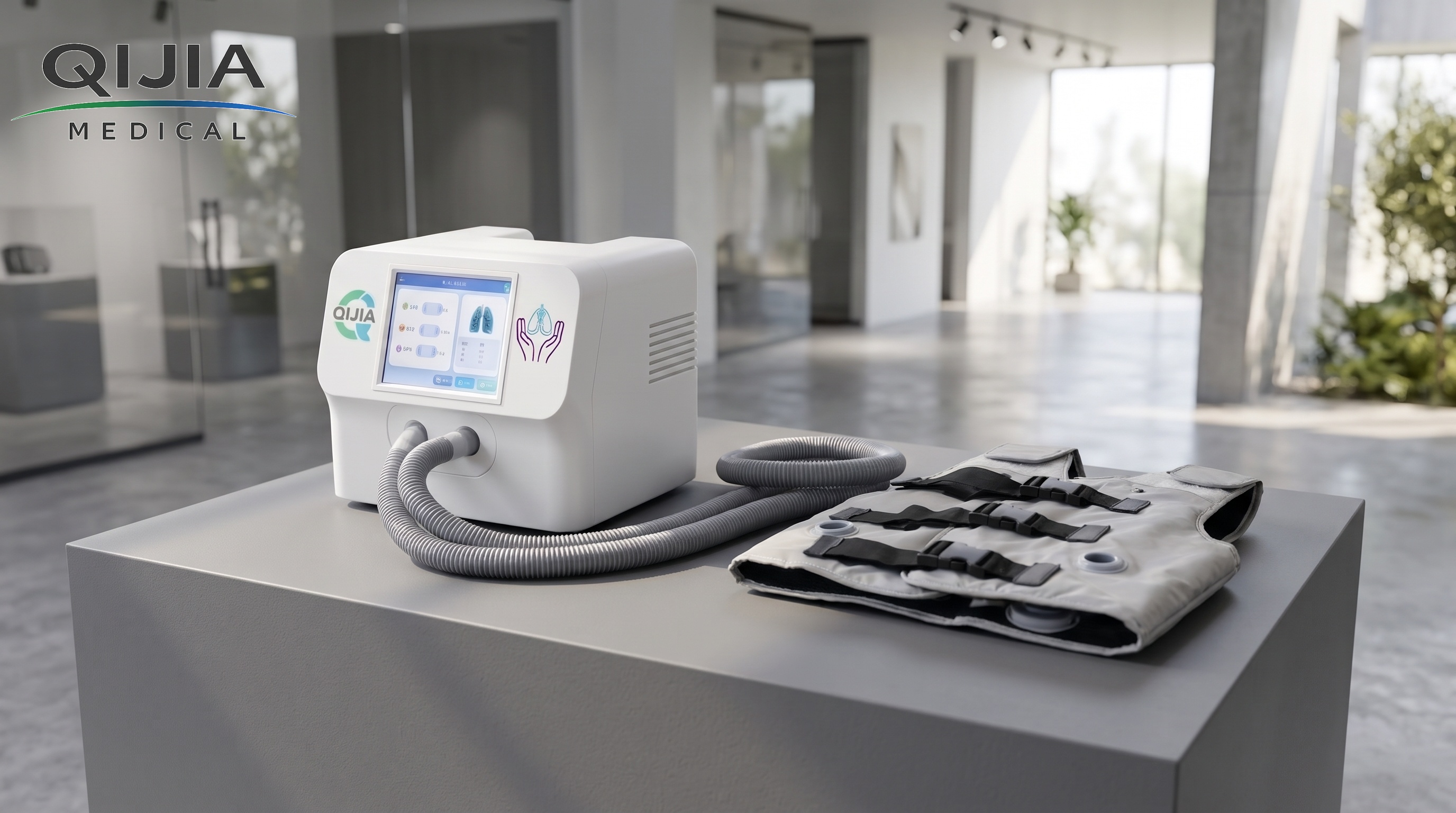
Our Airway Clearance System is based on High-Frequency Chest Wall Oscillation technology. The system uses an inflatable vest connected to a control unit through two air hoses. During operation, the unit delivers repeated air pulses to the vest, producing rhythmic chest wall compression and release.
This design provides a mechanical approach to airway secretion mobilization, helping move retained mucus toward larger airways as part of an appropriate airway clearance routine.
Potential application settings include respiratory care departments, rehabilitation facilities, and other clinical or home-care environments where HFCWO therapy is considered appropriate by healthcare professionals.
For more product information, technical details, and application guidance, visit our HFCWO Airway Clearance System product page.
8. Supporting Respiratory Care Through Medical Equipment Manufacturing
Effective respiratory care depends on more than a single device. It requires appropriate technology, clinical knowledge, reliable manufacturing, and equipment that can be integrated into different healthcare environments.
QIJIA MEDICAL focuses on the research, development, production, and integration of medical equipment. We support business partners seeking dependable medical equipment solutions, including distributors, healthcare suppliers, and organizations developing their own product portfolios.
With OEM and ODM cooperation options, we aim to provide flexible manufacturing and product collaboration opportunities based on different market requirements.
Learn more about our company, manufacturing capabilities, and cooperation opportunities on our About QIJIA MEDICAL page.
If you are interested in our HFCWO Airway Clearance System or would like to discuss distribution, OEM, or ODM cooperation, please contact the QIJIA MEDICAL team.
Conclusion: Mobilizing Secretions Is an Important Step in Airway Management
Retained airway secretions should never be viewed as a minor respiratory inconvenience, particularly in patients with impaired cough function or limited respiratory reserves. Persistent mucus accumulation can contribute to airway obstruction, atelectasis, impaired gas exchange, and increased respiratory care complexity.
High-Frequency Chest Wall Oscillation offers a mechanical approach to addressing one part of this problem. Through repeated chest wall compression and release, HFCWO generates oscillatory airflow and shear forces that help mobilize retained mucus toward larger airways.
Its value lies in supporting the airway clearance process, not replacing every other secretion removal method. When appropriately selected and combined with effective cough or suction strategies where necessary, HFCWO can be a useful component of a comprehensive respiratory care plan.
QIJIA MEDICAL — The Future of Smart Healthcare.
Frequently Asked Questions (FAQ)
1. What does HFCWO stand for?
HFCWO stands for High-Frequency Chest Wall Oscillation. It is a mechanical airway clearance technique that uses an inflatable vest connected to an air pulse generator to produce repeated chest wall oscillations.
2. How does an HFCWO vest help clear airway secretions?
The vest repeatedly inflates and deflates, creating mechanical oscillations that are transmitted through the chest wall. These oscillations generate airflow changes and shear forces that help loosen and mobilize mucus toward larger airways, where it can be removed through coughing, assisted coughing, or suctioning when necessary.
3. Does HFCWO directly suction mucus out of the lungs?
No. HFCWO is a mucus mobilization technique, not a suction device. It helps move retained secretions toward larger airways, but additional methods may be needed to remove the mobilized mucus from the respiratory tract.
4. Is HFCWO suitable for patients who cannot cough effectively?
HFCWO may help mobilize secretions in selected patients with weak cough function. However, mobilized mucus may still need to be removed through assisted coughing or suctioning. A healthcare professional should assess the patient's ability to clear secretions before treatment.
5. Can HFCWO be used in intensive care units?
HFCWO has been studied in selected critically ill patients, including some receiving respiratory support. However, current evidence does not establish clear benefits for major outcomes such as mortality or duration of mechanical ventilation. Its use in intensive care should be determined by the clinical team based on individual patient assessment.
6. Is HFCWO suitable for home use?
HFCWO may be used in selected home-care situations when prescribed or recommended by a qualified healthcare professional. Patients and caregivers should receive appropriate training and follow the device instructions and individualized treatment plan.
7. What is the difference between HFCWO and a cough assist device?
HFCWO uses external chest wall oscillations to help mobilize mucus. A cough assist device, also known as a mechanical insufflation-exsufflation device, uses positive and negative pressure to simulate or assist coughing. The two technologies have different mechanisms and may serve complementary roles in selected patients.
8. Does QIJIA MEDICAL provide OEM and ODM cooperation for airway clearance equipment?
QIJIA MEDICAL provides OEM and ODM cooperation opportunities for medical equipment partners. For details about product specifications, manufacturing capabilities, and potential cooperation, please contact our team directly.
References
McIlwaine M, Button B, Nevitt SJ. Personalising airway clearance in chronic lung disease. European Respiratory Review. 2017. Read the review.
Airway Clearance Techniques: The Right Choice for the Right Patient. Respiratory Care. 2021. Read the article.
Airway clearance in patients with neuromuscular disease. 2024. Read the review.
Ielo S, et al. High-Frequency Chest Wall Oscillation in Critical Care: A Systematic Review. Respiration. 2026. Read the systematic review.
Medical information on this page is intended for educational purposes and does not replace professional medical assessment or individualized treatment recommendations. HFCWO suitability and treatment settings should be determined by qualified healthcare professionals.