







Why Effective Coughing Matters: A Practical Guide to Daily Respiratory Care
Coughing is something most people rarely think about until it becomes difficult. Yet an effective cough is one of the body's simplest and most important ways to protect the respiratory system.
Every day, the airways are exposed to mucus, dust, small particles, and other irritants. The respiratory system has natural mechanisms to keep these materials moving out of the lungs. Among them, coughing plays a critical role.
When a person can cough effectively, mucus and airway secretions can often be cleared naturally. But when cough strength is reduced, even normal amounts of mucus may become harder to remove. This is why understanding effective coughing ability and establishing appropriate daily respiratory care can be important for people with limited respiratory muscle strength, reduced mobility, or other conditions that affect airway clearance.

What Makes a Cough Effective?
A cough is more than simply forcing air out of the lungs. An effective cough requires coordination between breathing muscles, the abdominal muscles, the chest, and the upper airway.
A simplified cough sequence can be understood in three stages:
Deep inhalation: Air is drawn into the lungs to create sufficient volume.
Compression: The muscles involved in coughing generate pressure inside the chest.
Rapid expiration: Air is expelled at high speed, helping move mucus and secretions toward the upper airway.
If one or more parts of this process become weaker, the resulting cough may not generate enough airflow to effectively move secretions.
This means that a person may still be able to cough, but the cough may not be strong enough to provide effective airway clearance.
Why Is Cough Strength Important for Respiratory Health?
The airways naturally produce mucus. Under normal circumstances, mucus is continuously transported toward the upper airway through the body's mucociliary clearance system and can then be swallowed or expelled.
Coughing provides an additional protective mechanism when secretions need to be moved more quickly.
When cough strength is adequate, airway secretions can be cleared more efficiently. When cough strength is significantly reduced, secretions may become more difficult to mobilize.
Over time, retained secretions can contribute to airway obstruction and may make breathing more difficult. For individuals who already have limited respiratory reserve, maintaining effective airway clearance can therefore become an important part of everyday respiratory care.
What Can Reduce the Ability to Cough?
Effective coughing depends heavily on muscle strength and coordination. A wide range of circumstances can affect this ability.
Reduced respiratory muscle strength
Weakness of the abdominal or chest muscles
Neuromuscular disorders
Spinal cord or neurological conditions
Reduced mobility or prolonged periods of inactivity
Fatigue and general physical weakness
Recovery after certain medical procedures or illnesses
Age-related reduction in muscle strength
The impact is not necessarily the same for every person. Some individuals may have a normal cough most of the time but experience difficulty clearing secretions when they become tired or when mucus production increases.
For this reason, respiratory care should consider not only whether a person can cough, but also whether the cough is strong and effective enough to clear airway secretions.
Daily Respiratory Care Starts with Simple Habits
Airway clearance does not always begin with medical equipment. Everyday respiratory care can include several simple habits that support comfortable breathing and help maintain normal airway function.
1. Maintain Appropriate Hydration
Drinking an appropriate amount of fluid, when medically suitable, can support normal mucus characteristics. Hydration needs vary from person to person, especially for individuals who have fluid restrictions or other medical considerations.
For people receiving professional care, hydration recommendations should follow the guidance of their healthcare provider.
2. Encourage Regular Movement When Appropriate
Physical movement can support overall respiratory function. Even gentle activity, when appropriate for the individual's condition, may be preferable to remaining completely inactive for long periods.
For people with limited mobility, positioning changes and professionally recommended movement routines may also form part of daily respiratory care.
3. Pay Attention to Changes in Breathing and Secretions
Daily observation can be valuable. Changes in the amount, thickness, or difficulty of clearing airway secretions may provide useful information for caregivers and healthcare professionals.
Likewise, noticeable changes in breathing comfort, coughing ability, or fatigue should not simply be ignored.
4. Practice Coughing Techniques When Recommended
Some people may benefit from professionally taught coughing or airway clearance techniques. Depending on the individual's condition, respiratory therapists or other healthcare professionals may recommend specific techniques to improve secretion clearance.
The most appropriate technique depends on the person's respiratory and physical condition, so individualized professional assessment is important.
When a Person Cannot Produce an Effective Cough
The challenge becomes more significant when a person is unable to generate an effective cough independently.
In this situation, repeatedly attempting to cough may not necessarily solve the problem. A weak cough can leave secretions in the lower airways even though the person feels the need to clear them.
This is one reason healthcare professionals may consider mechanical airway clearance support for selected patients.
A cough assist device, also known as a mechanical insufflation-exsufflation system, is designed to assist the coughing process by applying positive pressure followed by negative pressure. This produces an airflow pattern intended to help mobilize airway secretions toward the upper airway.
For more information about this type of respiratory equipment, see our Cough Assist Device product page.
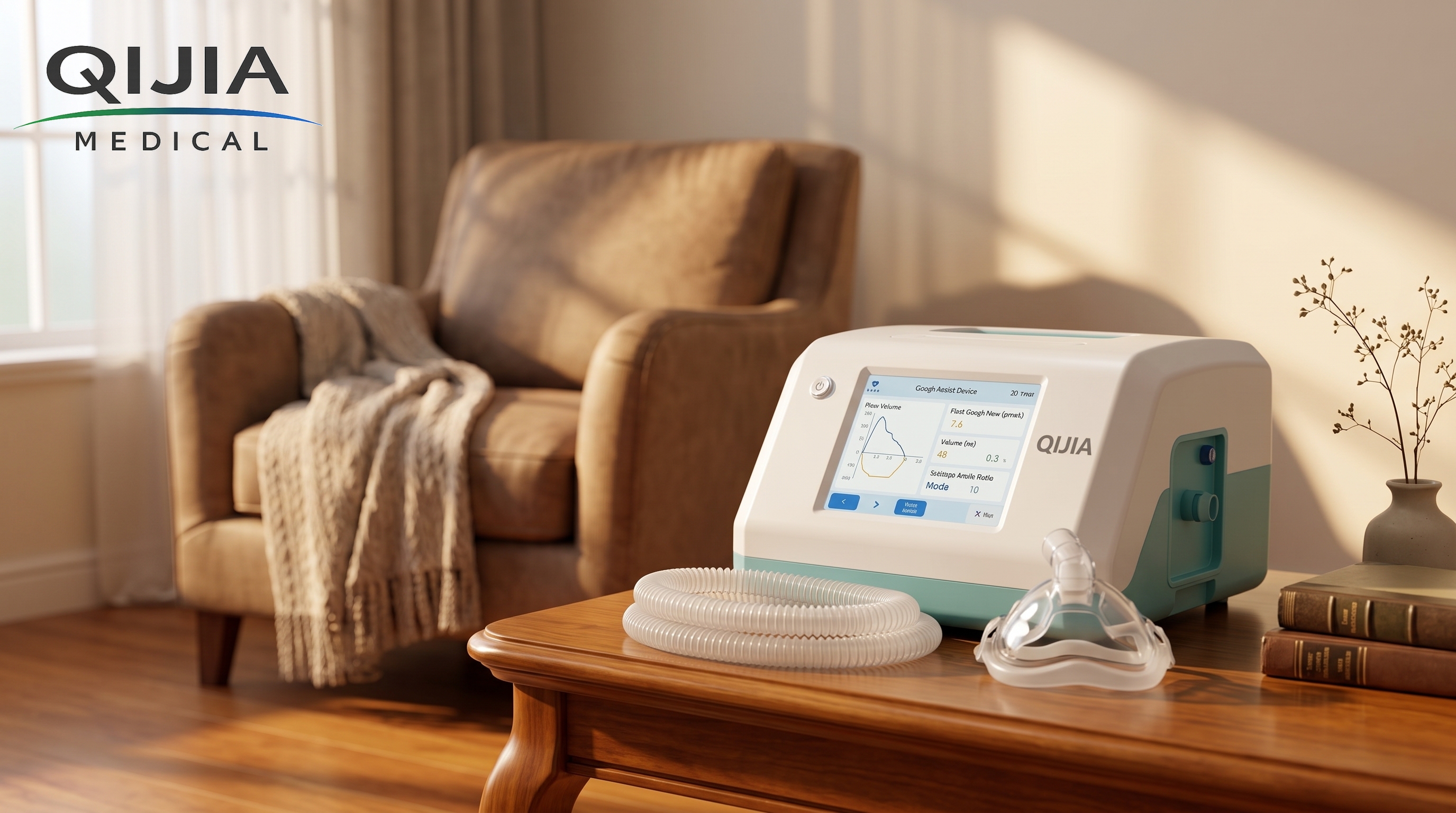
How Does a Cough Assist Device Support Airway Clearance?
A cough assist device is designed to simulate important parts of a natural cough.
During treatment, positive pressure helps expand the lungs and prepare them for the cough cycle. This is followed by rapid negative pressure, creating a high expiratory airflow that can assist in moving secretions.
The basic principle is often described as mechanical insufflation-exsufflation.
Unlike simply providing oxygen or conventional ventilation support, a cough assist system focuses specifically on assisting the airway clearance process.
Its use should be based on appropriate clinical assessment, particularly for individuals whose cough strength is insufficient for effective secretion clearance.
Who May Need Additional Cough Assistance?
Mechanical cough assistance may be considered in respiratory care for people who have difficulty generating an effective cough because of reduced muscle strength or impaired neuromuscular function.
Depending on clinical circumstances, healthcare professionals may evaluate cough assistance for individuals with conditions such as:
Neuromuscular disorders
Spinal cord-related weakness
Progressive muscle weakness
Conditions associated with impaired respiratory muscle function
Patients with limited ability to clear airway secretions independently
This does not mean that every person with these conditions requires a cough assist device. The need for mechanical airway clearance should be determined according to the individual's respiratory status, cough effectiveness, secretion burden, and clinical care plan.
Daily Respiratory Care Is About Consistency
Good respiratory care is rarely about one single action. It is often a combination of observation, positioning, appropriate hydration, physical activity when possible, prescribed therapies, and effective airway clearance strategies.
For people with reduced cough strength, the key question is not simply:
“Can the person cough?”
A more useful question may be:
“Is the cough strong enough to clear airway secretions effectively?”
This distinction is important because a person may have a visible coughing response without generating sufficient airflow for effective secretion clearance.
Why Early Attention to Cough Effectiveness Matters
Respiratory care is often easier to manage when changes are recognized early rather than after airway clearance becomes significantly difficult.
Caregivers and healthcare professionals can pay attention to practical signs such as changes in cough strength, difficulty bringing up mucus, increased effort during coughing, unusual fatigue after repeated coughing, or a noticeable change in the person's usual breathing pattern.
These observations do not replace medical assessment, but they can help identify when a person's existing respiratory care routine may need to be reviewed.
For patients with chronic conditions or reduced physical strength, having an appropriate airway clearance plan can also give caregivers a clearer framework for daily respiratory management.
Choosing Respiratory Equipment for Airway Clearance
When mechanical airway clearance is considered, equipment selection should focus on clinical suitability, usability, reliability, and the needs of the intended care environment.
For hospitals and rehabilitation centers, factors such as operating modes, pressure control, patient interfaces, cleaning requirements, staff training, and after-sales support may all be relevant.
For manufacturers and distributors, product customization and long-term supply capability can also be important considerations.
QIJIA MEDICAL provides medical device manufacturing and OEM/ODM cooperation for international partners looking for respiratory care equipment and other rehabilitation solutions.
From Coughing Ability to Better Respiratory Care
An effective cough is easy to take for granted. It happens automatically for most healthy people and usually requires no special attention.
But when respiratory muscle strength decreases, the importance of an effective cough becomes much more apparent.
Understanding cough effectiveness, observing changes in airway secretions, maintaining appropriate daily respiratory care, and considering professional airway clearance support when necessary can all contribute to a more structured approach to respiratory management.
A cough assist device is one potential tool within this broader approach. It does not replace medical evaluation or other respiratory therapies, but for appropriately selected patients, mechanical insufflation-exsufflation can provide additional assistance when a natural cough is not strong enough.
If you are looking for a cough assist device for a hospital, rehabilitation center, respiratory care program, or distribution business, you can contact QIJIA MEDICAL for product information, technical details, and cooperation opportunities.

Frequently Asked Questions
1. Why is an effective cough important?
An effective cough helps move mucus and other secretions out of the airways. When cough strength is reduced, clearing secretions may become more difficult, making airway clearance an important part of respiratory care.
2. Can a person cough but still have an ineffective cough?
Yes. A person may be able to produce a coughing motion but may not generate enough airflow or pressure to effectively move airway secretions. Cough effectiveness depends on more than simply being able to cough.
3. What is a cough assist device?
A cough assist device is a respiratory care device that uses mechanical insufflation-exsufflation. It alternates positive and negative pressure to assist the airflow pattern of a natural cough and help mobilize airway secretions.
4. Who may benefit from mechanical cough assistance?
It may be considered for individuals with significantly reduced cough strength, particularly when respiratory or other muscle weakness makes independent secretion clearance difficult. Suitability should be determined by an appropriate healthcare professional.
5. Is a cough assist device the same as an oxygen concentrator?
No. An oxygen concentrator is designed to provide supplemental oxygen, while a cough assist device is designed to assist airway clearance. They serve different purposes in respiratory care.
6. Can daily respiratory care replace a cough assist device?
Not necessarily. Simple respiratory care practices may support overall airway management, but they cannot replace mechanical airway clearance when a person is unable to generate an effective cough. The appropriate approach depends on the individual's clinical needs.
7. Can cough assist devices be used at home?
Some cough assist devices can be incorporated into home respiratory care programs when prescribed or recommended by healthcare professionals. Patients and caregivers should receive appropriate instruction on operation, settings, cleaning, and safety.
8. How can hospitals or distributors source a cough assist device?
Hospitals, clinics, rehabilitation centers, distributors, and other professional organizations can contact a medical device manufacturer directly to discuss specifications, documentation, OEM/ODM requirements, and distribution cooperation.
Need More Information?
For product specifications, OEM/ODM cooperation, distribution opportunities, or other questions about respiratory care equipment, contact QIJIA MEDICAL.