







ICU Airway Secretion Retention: The Hidden Respiratory Risks and the Importance of Effective Airway Clearance
In intensive care units (ICUs), respiratory complications can develop from problems that are not always immediately visible. While healthcare professionals closely monitor oxygen saturation, ventilation parameters, and lung function, another important concern deserves equal attention: the accumulation of airway secretions.
For critically ill patients, particularly those receiving mechanical ventilation, the inability to effectively clear mucus can create a series of respiratory challenges. Retained secretions may obstruct airflow, interfere with normal lung ventilation, contribute to atelectasis, and increase the complexity of respiratory management.
Airway secretion retention is more than a temporary inconvenience. It reflects an underlying failure of the respiratory system's natural clearance mechanisms, which can be especially vulnerable during critical illness.
Understanding why mucus accumulates, what risks it creates, and how different airway clearance techniques can help is essential for developing effective respiratory care strategies. High-Frequency Chest Wall Oscillation (HFCWO) is one technology that healthcare professionals may consider when additional secretion mobilization is needed in selected patients.
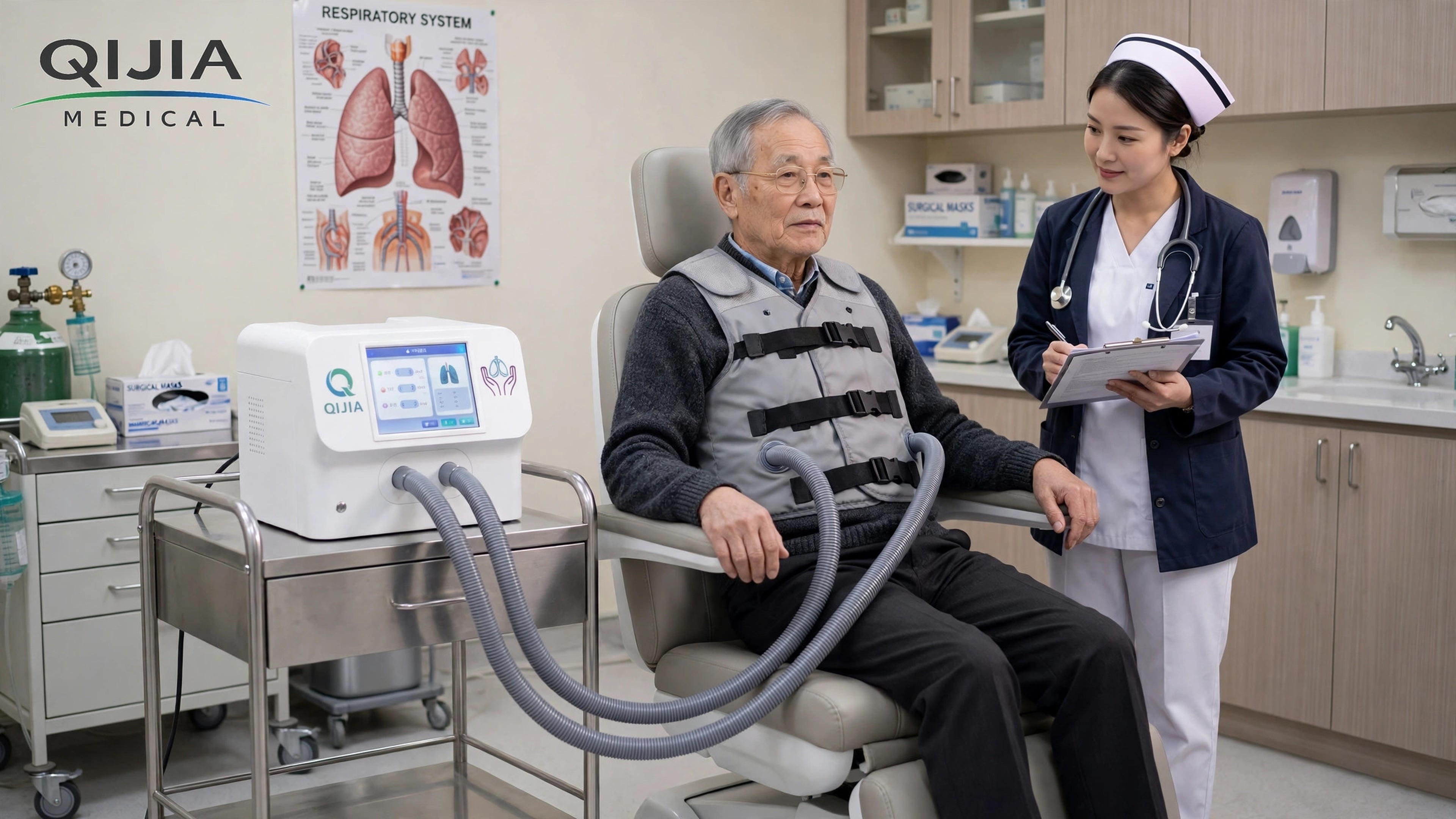
1. Why Airway Secretion Retention Is a Serious Concern in ICU Patients
Under normal conditions, the respiratory system continuously protects itself through a combination of mucus production, mucociliary transport, and coughing.
Mucus traps inhaled particles and microorganisms. Microscopic cilia lining the respiratory tract move this mucus toward the throat, while an effective cough helps remove accumulated secretions from the airways.
However, critical illness can disrupt several parts of this defense system simultaneously.
Mechanical Ventilation Can Interfere with Natural Airway Defense
Patients requiring invasive mechanical ventilation generally need an endotracheal tube or tracheostomy tube. These artificial airways bypass some of the normal upper respiratory defense mechanisms and may interfere with natural secretion clearance.
Impaired mucociliary function, inadequate humidification, and changes in airway conditions can contribute to thicker secretions and mucus accumulation. In addition, the presence of an artificial airway does not guarantee that secretions can be effectively removed from every region of the respiratory tract.
Sedation and Immobility Reduce Effective Coughing
Many ICU patients require sedation, prolonged bed rest, or respiratory support that limits normal physical activity.
These conditions can reduce respiratory muscle activity and weaken the patient's ability to generate an effective cough. When expiratory airflow is insufficient, secretions may remain in the airways instead of being transported outward.
This creates an important clinical challenge: mucus may continue to accumulate even when the patient is receiving continuous respiratory support.
Critical Illness Can Impair Respiratory Muscle Function
Severe systemic illness, prolonged mechanical ventilation, and ICU-acquired weakness can affect the muscles responsible for breathing and coughing.
When respiratory muscle strength decreases, patients may have difficulty generating the airflow required to clear accumulated secretions. This problem can persist during recovery, even when other indicators of respiratory function begin to improve.
For these reasons, effective airway secretion management should be considered throughout the patient's critical care journey rather than only when obvious respiratory deterioration occurs.
2. The Potential Consequences of Uncontrolled Airway Secretion Accumulation
One of the most important concerns associated with retained airway secretions is that their effects can extend beyond the immediate presence of mucus.
In patients with limited respiratory reserve, even partial airway obstruction may have significant consequences. Several complications deserve particular attention.
2.1 Mucus Plugging and Airway Obstruction
Thick or excessive mucus can accumulate within the bronchial tree and partially or completely block individual airways. This condition is commonly described as mucus plugging.
When airflow becomes restricted, the lung regions beyond the obstruction may receive insufficient ventilation. Depending on the location and severity of the blockage, this can lead to localized respiratory dysfunction or more significant deterioration.
In critically ill patients, mucus plugging may also complicate ventilator management and require additional airway clearance interventions.
2.2 Atelectasis and Loss of Functional Lung Volume
Atelectasis refers to the partial or complete collapse of lung tissue. Airway obstruction caused by retained mucus is one potential mechanism behind this condition.
When an airway becomes blocked, the air trapped beyond the obstruction may gradually be absorbed into the bloodstream. The affected alveoli can then lose volume and collapse.
This reduces the amount of functional lung tissue available for gas exchange and may create additional challenges for patients who are already experiencing respiratory insufficiency.
Preventing and managing airway obstruction is therefore an important consideration in comprehensive respiratory care.
2.3 Impaired Oxygen Exchange
Effective oxygen exchange requires a coordinated relationship between airflow reaching the alveoli and blood circulating through the pulmonary capillaries.
When mucus accumulation interferes with ventilation, some lung regions may receive insufficient airflow despite continued blood circulation. This can contribute to ventilation-perfusion mismatch and hypoxemia.
For patients with severe pulmonary disease or acute respiratory failure, additional impairment of gas exchange may place further demands on an already compromised respiratory system.
2.4 Increased Susceptibility to Respiratory Infections
The respiratory tract relies on effective mucus transport to remove microorganisms and inhaled particles. When this protective mechanism becomes impaired, retained secretions may contribute to an environment favorable to microbial growth.
Critically ill patients already face multiple infection-related risk factors, including invasive devices, prolonged hospitalization, and impaired immune defenses.
Secretion retention is one concern within this broader clinical picture. It may contribute to respiratory complications, including those associated with ventilator-associated pneumonia (VAP), although mucus accumulation alone does not establish that an infection will develop.
2.5 Difficulties During Ventilator Weaning and Recovery
Reducing ventilator support is not determined solely by a patient's ability to breathe independently. Effective airway protection and secretion management are also important considerations.
Patients with weak cough effectiveness or a substantial secretion burden may have difficulty maintaining airway clearance after extubation.
In some cases, inadequate secretion management can contribute to extubation failure or the need for additional respiratory interventions.
This is why airway clearance should remain part of the overall respiratory assessment during the recovery and ventilator-weaning process.
3. Why Suctioning Alone May Not Address Every Secretion Clearance Problem
Endotracheal suctioning is an established and essential procedure in the management of many mechanically ventilated patients. It helps remove accessible secretions from artificial airways and central respiratory passages when clinically indicated.
However, removing mucus from an accessible airway and mobilizing retained secretions from more peripheral regions are not identical processes.
A suction catheter can remove secretions that it can reach, but it does not necessarily mobilize mucus located in smaller or more peripheral airways.
For patients with impaired mucociliary transport, weak coughing, or persistent secretion retention, healthcare professionals may consider additional airway clearance strategies.
Depending on the patient's condition, these may include:
Appropriate respiratory humidification and secretion management.
Patient positioning and mobilization when clinically appropriate.
Chest physiotherapy and selected airway clearance techniques.
Mechanical insufflation-exsufflation for patients with inadequate cough effectiveness.
High-Frequency Chest Wall Oscillation for selected patients requiring additional secretion mobilization.
These approaches have different mechanisms and clinical purposes. They should not be regarded as interchangeable treatments or automatic replacements for conventional suctioning.
4. How HFCWO Technology Supports Airway Secretion Mobilization
High-Frequency Chest Wall Oscillation (HFCWO) is a mechanical airway clearance technique designed to produce rapid and repeated compression and relaxation of the chest wall.
Unlike suctioning, which directly removes accessible secretions, HFCWO focuses on helping loosen and mobilize mucus within the respiratory tract.
The Working Principle of High-Frequency Chest Wall Oscillation
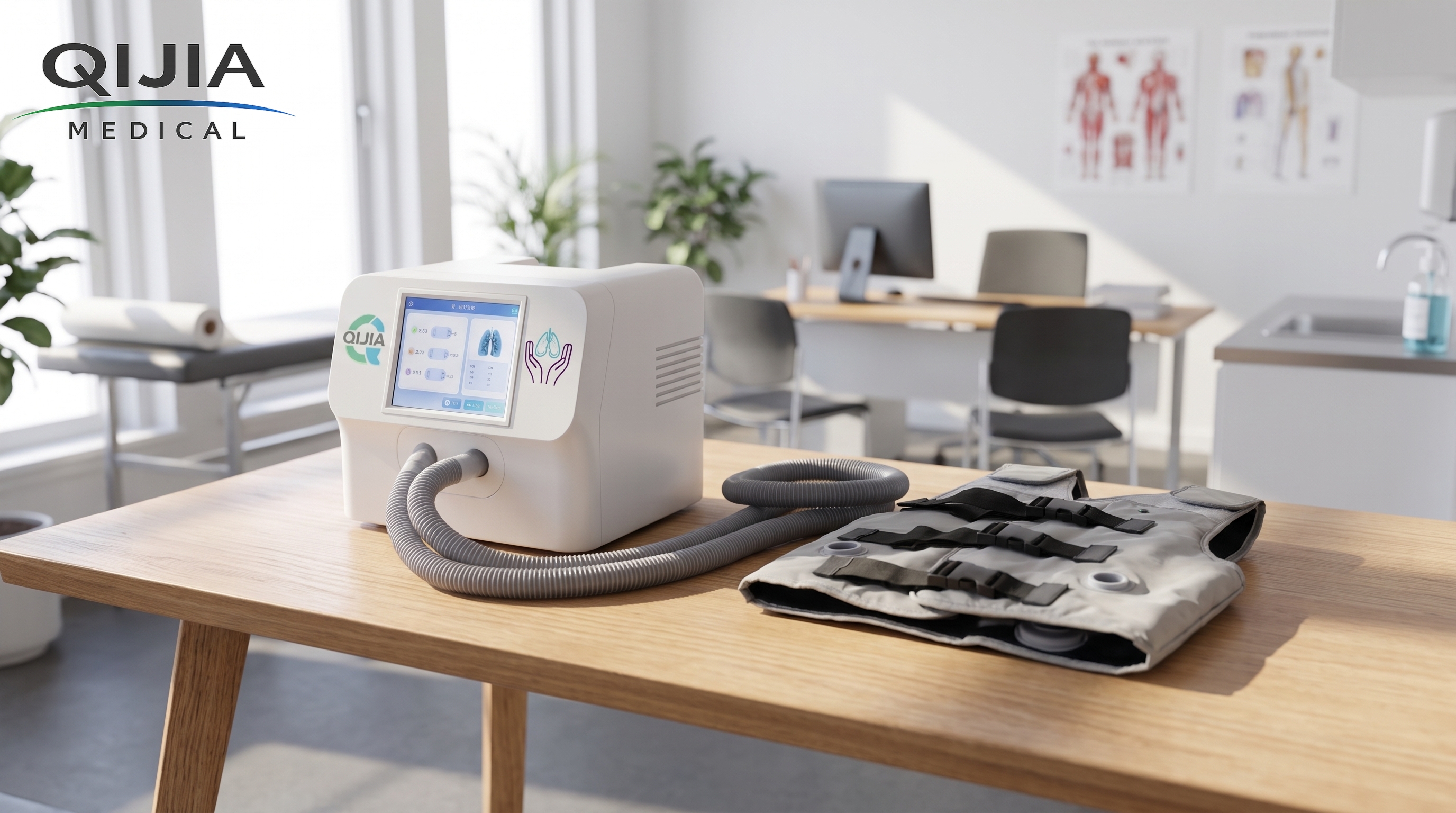
An HFCWO airway clearance system generally consists of an air pulse generator, an inflatable vest, and connecting air hoses.
During treatment, the generator delivers controlled air pulses into the vest. These pulses cause the vest to inflate and deflate rapidly, producing repeated mechanical compression and release of the chest wall.
The resulting oscillations generate changes in airflow within the respiratory tract. These oscillatory airflow patterns and associated mechanical effects can help mobilize airway secretions and encourage their movement toward larger airways.
Once mucus has been mobilized, it must still be expelled through coughing or removed with appropriate assistance, such as suctioning, depending on the patient's condition and cough effectiveness.
Why Secretion Mobilization Is Important
For patients whose natural airway clearance mechanisms are impaired, helping move retained mucus toward accessible airways is an important part of secretion management.
HFCWO provides a controlled mechanical approach to chest wall oscillation. Rather than attempting to replace the body's entire respiratory clearance process, it supports one important stage: secretion mobilization.
This distinction is particularly important in critical care. HFCWO does not provide ventilatory support, directly suction mucus, or reproduce the complete positive-pressure and negative-pressure cycle of a mechanical cough assist device.
Its potential role is to complement other respiratory care interventions when clinically appropriate.
5. What Does Clinical Research Say About HFCWO in Critical Care?
Although HFCWO has been used in various respiratory care applications, its role in critically ill patients remains an area of ongoing clinical investigation.
A systematic review published in 2026, titled High-Frequency Chest Wall Oscillation in Critical Care: A Systematic Review, evaluated available evidence concerning HFCWO in adult ICU patients.
The review found that HFCWO appeared feasible and was generally well tolerated in selected patients. Some studies reported improvements in secretion clearance, respiratory mechanics, or oxygenation.
However, the effects on major clinical outcomes, including mechanical ventilation duration, ICU length of stay, and mortality, remained variable and inconclusive. The authors emphasized that further well-designed clinical trials are needed to establish appropriate patient selection and treatment protocols.
Another 2026 systematic review published in Critical Care examined 46 studies involving 1,884 invasively ventilated adult ICU patients. It evaluated several airway clearance techniques, including mechanical cough assistance and other respiratory physiotherapy interventions.
The findings suggested that selected techniques may improve short-term secretion clearance in certain patients. However, the available evidence did not establish consistent improvements in mortality, mechanical ventilation duration, or ICU length of stay.
These studies highlight an important clinical principle: improved secretion mobilization is a meaningful physiological objective, but it should not automatically be interpreted as proof of improved long-term patient outcomes.
For healthcare professionals, the priority remains identifying patients who may benefit from additional airway clearance support and selecting appropriate techniques according to individual clinical needs.
6. Selecting Appropriate Airway Clearance Strategies for ICU Patients
Not every critically ill patient requires the same airway clearance approach. The underlying cause of secretion retention, respiratory stability, cough effectiveness, and the patient's ability to tolerate treatment all influence clinical decision-making.
For selected patients, HFCWO may be considered as one component of a comprehensive airway clearance plan.
Before using chest wall oscillation, healthcare professionals should evaluate:
The patient's respiratory and hemodynamic stability.
The volume and characteristics of airway secretions.
The patient's ability to cough and expel mobilized mucus.
Underlying pulmonary conditions and possible contraindications.
Potential risks associated with chest wall compression and oscillation.
The need for additional suctioning or other secretion removal procedures.
Particular caution is required in patients with unstable cardiopulmonary conditions, recent thoracic surgery, significant bleeding risks, or other conditions that may make chest wall oscillation inappropriate.
Treatment parameters and clinical indications should be determined by qualified healthcare professionals in accordance with patient assessment and institutional protocols.
7. QIJIA Airway Clearance System: A Mechanical Approach to Secretion Mobilization
As the importance of respiratory secretion management continues to receive attention in critical care, reliable airway clearance equipment has become an important consideration for hospitals, respiratory care providers, and medical equipment distributors.
QIJIA MEDICAL develops and manufactures respiratory care and rehabilitation equipment, including its High-Frequency Chest Wall Oscillation Airway Clearance System.
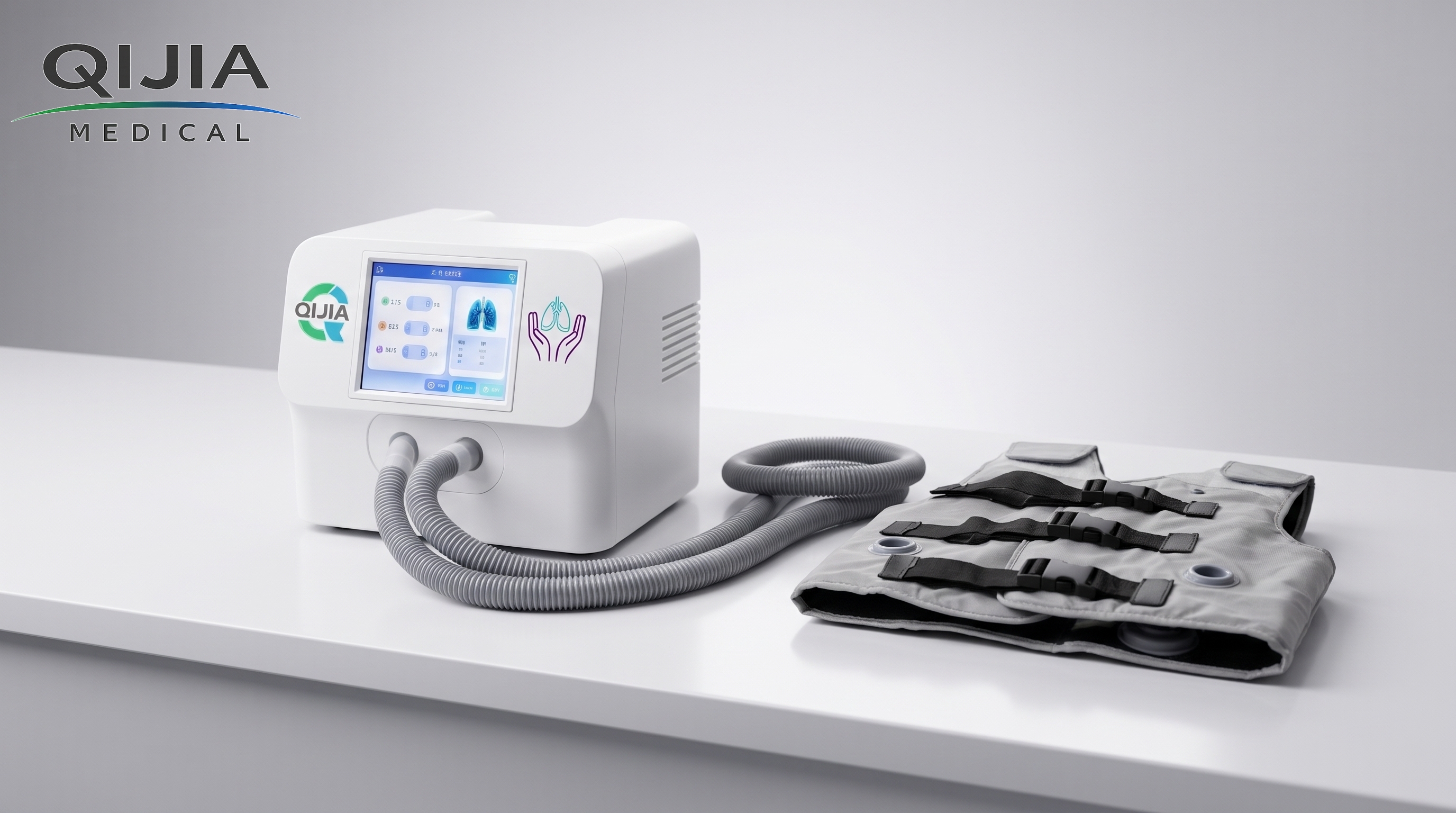
Our pneumatic airway clearance system uses an air pulse generator connected to an inflatable vest through two air hoses. Controlled inflation and rapid deflation create repeated chest wall oscillations designed to help loosen and mobilize airway secretions.
By applying the principles of HFCWO technology, the system provides a mechanical approach to supporting respiratory secretion management.
Its potential applications should be evaluated according to patient condition, clinical suitability, device specifications, and professional supervision. It is not intended to replace conventional suctioning, mechanical ventilation, or other essential respiratory interventions.
For healthcare institutions and respiratory care providers exploring airway clearance equipment, understanding the working principle and appropriate application of HFCWO is an important step in evaluating available solutions.
Explore our Airway Clearance System to learn more about QIJIA's pneumatic high-frequency oscillation technology, product configuration, and technical details.
As a medical equipment manufacturer, QIJIA MEDICAL also supports international business partners through OEM and ODM cooperation, providing manufacturing and product development solutions for different market requirements.
Hospitals, medical equipment distributors, and potential business partners are welcome to contact our team for product information, technical discussions, and cooperation opportunities.
Conclusion: Effective Airway Clearance Is an Important Part of Critical Care
Airway secretion retention is a significant respiratory management challenge in critically ill patients. When natural mucus transport and cough mechanisms become impaired, accumulated secretions may contribute to airway obstruction, atelectasis, impaired gas exchange, and other respiratory complications.
Although conventional suctioning remains essential, it may not address every aspect of secretion mobilization. Additional airway clearance techniques can therefore be considered for selected patients as part of individualized respiratory care.
High-Frequency Chest Wall Oscillation offers a mechanical approach to supporting mucus mobilization through controlled chest wall compression and relaxation. While its clinical role in ICU patients continues to be investigated, it represents an important technology within the broader field of respiratory secretion management.
For healthcare professionals and medical equipment partners, understanding the risks of secretion retention and the principles behind modern airway clearance technology can help support more informed respiratory care decisions.
Frequently Asked Questions (FAQ)
1. Why is airway secretion retention dangerous for ICU patients?
Retained airway secretions can contribute to mucus plugging, airway obstruction, atelectasis, and impaired gas exchange. In critically ill patients with limited respiratory reserve, these complications may make respiratory management more difficult and contribute to further pulmonary problems.
2. Why do mechanically ventilated patients have difficulty clearing mucus?
Mechanical ventilation through an artificial airway, sedation, respiratory muscle weakness, reduced cough effectiveness, and impaired mucociliary function can interfere with natural airway clearance. These factors may cause secretions to accumulate within the respiratory tract.
3. Can suctioning completely remove retained airway secretions?
No. Suctioning is an essential method for removing accessible secretions from artificial airways and central respiratory passages. However, it does not necessarily mobilize mucus located in more peripheral airways. Additional airway clearance techniques may be considered when clinically appropriate.
4. How does an HFCWO airway clearance system help remove mucus?
An HFCWO system uses an inflatable vest connected to an air pulse generator. Rapid inflation and deflation create repeated chest wall compression and relaxation, generating oscillatory airflow that helps loosen and mobilize airway secretions toward larger airways. Additional coughing or suctioning may still be necessary.
5. Is HFCWO suitable for every ICU patient?
No. HFCWO is not appropriate for every critically ill patient. Healthcare professionals must assess respiratory stability, underlying conditions, secretion characteristics, treatment tolerance, and potential contraindications before considering this technique.
6. Does HFCWO replace mechanical cough assistance?
No. HFCWO and mechanical insufflation-exsufflation (MI-E) use different mechanisms. HFCWO applies external chest wall oscillations to help mobilize mucus, while MI-E uses positive and negative airway pressure to simulate coughing. The two techniques serve different purposes.
7. Can HFCWO be used alongside conventional airway suctioning?
In selected patients, HFCWO may be incorporated into a broader airway clearance strategy that also includes suctioning. Because HFCWO primarily mobilizes secretions rather than directly removing them, additional clearance procedures may be needed depending on the patient's cough effectiveness and clinical condition.
8. Does clinical research prove that HFCWO reduces ICU mortality or mechanical ventilation duration?
Current evidence does not establish that HFCWO reduces ICU mortality or mechanical ventilation duration. Some studies suggest potential benefits in secretion mobilization and selected short-term physiological measures, but larger and better-designed clinical trials are needed to confirm its impact on major clinical outcomes.
9. Does QIJIA MEDICAL provide OEM and ODM services for airway clearance systems?
Yes. QIJIA MEDICAL is a medical equipment manufacturer offering OEM and ODM cooperation. International distributors, healthcare organizations, and business partners can contact our team to discuss product specifications, manufacturing requirements, and potential cooperation.