







Beyond Conventional Suctioning: Comparing Different Airway Clearance Strategies in Critical Care
In critical care, maintaining an open airway is essential to effective ventilation and gas exchange. However, for patients who are critically ill, mechanically ventilated, or unable to cough effectively, managing airway secretions can be a persistent challenge.
When mucus accumulates and cannot be removed efficiently, the consequences may extend beyond coughing difficulties. Retained secretions can contribute to airway obstruction, increased airway resistance, atelectasis, impaired ventilation, and deterioration in respiratory function. In vulnerable patients, even a localized mucus plug can create a significant clinical problem.
Conventional suctioning remains an essential part of respiratory care, particularly for patients with artificial airways. But suctioning is not the only approach to secretion management, nor does it address every stage of the airway clearance process.
Other techniques, including High-Frequency Chest Wall Oscillation (HFCWO), Mechanical Insufflation-Exsufflation (MI-E), and conventional chest physiotherapy, have different mechanisms and clinical purposes.
Understanding these differences is important for healthcare professionals, respiratory care providers, and medical equipment distributors evaluating modern airway clearance solutions.
1. Why Is Inadequate Airway Clearance a Serious Concern in Critical Care?
Healthy airways continuously transport mucus and trapped particles toward the throat through natural clearance mechanisms. Coughing provides an additional defense by generating airflow capable of expelling accumulated secretions.
In critically ill patients, however, these protective mechanisms may become less effective.
Several factors can contribute to secretion retention:
Reduced cough strength: Sedation, neurological impairment, and neuromuscular weakness may prevent patients from generating an effective cough.
Artificial airways: Endotracheal and tracheostomy tubes bypass parts of the upper respiratory tract's natural defense system and can interfere with normal secretion clearance.
Increased mucus production: Respiratory inflammation and infection may increase secretion volume and alter mucus properties.
Reduced mobility: Prolonged bed rest and critical illness can make natural secretion clearance more difficult.
Impaired mucociliary function: Airway inflammation, inadequate humidification, and other physiological changes may reduce the effectiveness of mucus transport.
When secretions remain in the respiratory tract, several complications may develop.
Airway Obstruction and Mucus Plugging
Thick or accumulated mucus can narrow the airway lumen or form a mucus plug. Depending on its location, this may restrict airflow to part of the lung and increase the work required for breathing.
Atelectasis and Impaired Gas Exchange
If an airway becomes significantly obstructed, the lung tissue beyond the blockage may lose ventilation and develop atelectasis. More extensive or persistent atelectasis can interfere with oxygen exchange and complicate respiratory management.
Increased Respiratory Care Demands
Patients with persistent secretion retention may require repeated assessment, secretion removal procedures, and additional airway clearance interventions. For patients already experiencing respiratory failure, ineffective secretion management can add further complexity to an already demanding clinical situation.
These risks explain why airway clearance should be viewed as an ongoing component of respiratory management rather than a procedure performed only when visible mucus appears.
2. Conventional Suctioning: Essential for Secretion Removal, but Not a Complete Solution
Airway suctioning is one of the most familiar techniques used in hospitals and intensive care units. It involves applying negative pressure through a suction catheter to remove accessible secretions from the upper or artificial airway.
For intubated or tracheostomized patients, suctioning is particularly important because these patients may not be able to clear secretions independently.
How Does Suctioning Work?
A suction catheter is introduced into the artificial airway or accessible airway passage. Negative pressure is then applied to remove accumulated secretions through the catheter.
Depending on the patient's condition and clinical requirements, healthcare professionals may use open or closed suction systems.
The main advantage of suctioning is straightforward: it physically removes secretions that can be reached by the catheter.
What Are the Limitations of Suctioning?
Although suctioning is indispensable in many clinical situations, it has limitations.
Limited reach: A suction catheter primarily removes secretions within the accessible airway. It does not mechanically mobilize mucus throughout the peripheral bronchial tree.
Repeated procedures may be necessary: Patients who continuously produce mucus may require repeated suctioning based on clinical assessment.
Potential physiological reactions: Suctioning may cause temporary oxygen desaturation, changes in heart rate or blood pressure, bronchospasm, or airway irritation.
Risk of airway trauma: Inappropriate catheter insertion, excessive suction pressure, or prolonged suction application can injure airway mucosa.
The American Association for Respiratory Care (AARC) emphasizes that artificial airway suctioning should be performed according to clinical indications and appropriate safety procedures. It is not simply a matter of suctioning as frequently as possible.
Key point: Suctioning is primarily a secretion removal technique. It is not designed to replace methods that help mobilize mucus from more peripheral areas of the respiratory tract.
3. HFCWO: Mobilizing Retained Secretions Through Chest Wall Oscillation
High-Frequency Chest Wall Oscillation (HFCWO) addresses a different part of the airway clearance process.
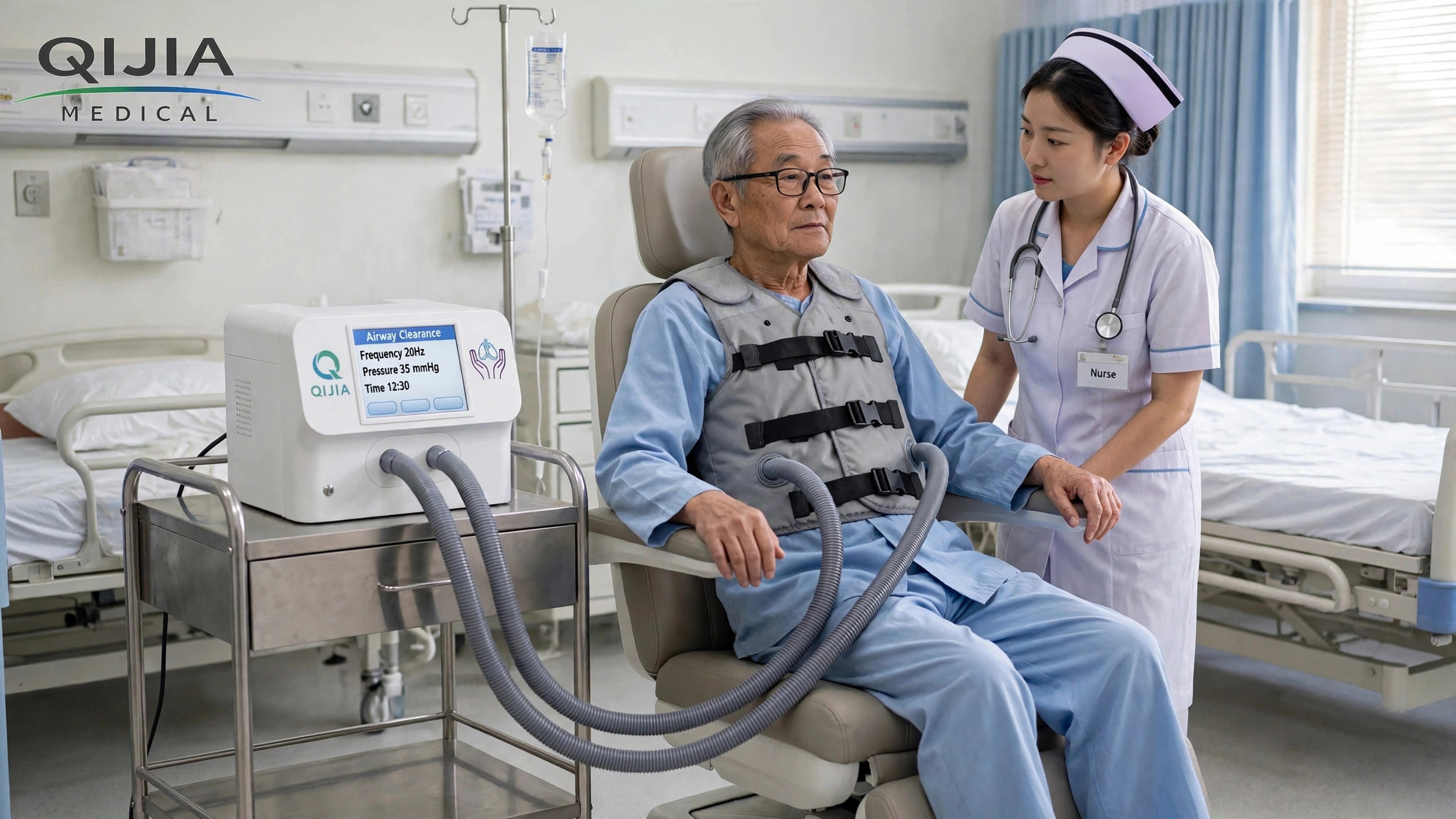
Rather than inserting a catheter into the airway to extract mucus, HFCWO uses an inflatable vest connected to an air pulse generator. The vest repeatedly inflates and deflates, creating rhythmic mechanical oscillations across the chest wall.
How Does HFCWO Support Airway Clearance?
The repeated pressure changes generate oscillatory airflow within the respiratory tract. These airflow changes create shear forces between the moving air and the mucus layer lining the airways.
These mechanical effects may help loosen retained secretions and encourage their movement from smaller peripheral airways toward larger central airways.
Once the mucus reaches the central airways, it can be removed through coughing, assisted coughing, or suctioning when necessary.
What Makes HFCWO Different from Suctioning?
The fundamental difference is the stage of secretion management each technique addresses.
HFCWO focuses on mucus mobilization, while suctioning focuses on physical secretion removal.
For selected patients with excessive or difficult-to-mobilize secretions, these approaches may serve complementary purposes. HFCWO may help move mucus toward accessible airways, while suctioning can remove secretions that the patient cannot expel independently.
However, HFCWO does not directly suction mucus out of the lungs. Patients with ineffective cough function may still need an additional secretion removal strategy after treatment.
4. Cough Assist (MI-E): Supporting Patients Who Cannot Generate an Effective Cough
Mobilizing mucus is only one part of airway clearance. The ability to expel secretions is equally important.
Some patients, particularly those with neuromuscular disorders or significant respiratory muscle weakness, may be unable to produce an effective cough even when secretions have moved toward the central airways.
Mechanical Insufflation-Exsufflation (MI-E), commonly known as a Cough Assist technique, is designed to address this problem.
How Does Mechanical Insufflation-Exsufflation Work?
An MI-E device applies positive pressure to help inflate the lungs, followed by a rapid shift to negative pressure. This pressure change creates an expiratory airflow intended to simulate or assist a natural cough.
By increasing expiratory airflow, MI-E can help move secretions from the central airways toward the mouth, where they can be expelled or removed with suction when necessary.
Who May Require Cough Assistance?
MI-E may be considered for selected patients with conditions such as:
Neuromuscular diseases that weaken respiratory muscles.
Spinal cord injuries affecting cough function.
Neurological conditions associated with ineffective coughing.
Other conditions that significantly reduce peak cough flow.
HFCWO and MI-E therefore have different but potentially complementary functions. HFCWO helps mobilize secretions, while MI-E helps generate the airflow needed to expel them.
5. Conventional Chest Physiotherapy: Manual Techniques Still Have a Role
Conventional chest physiotherapy includes several non-device-based airway clearance methods, such as postural drainage, manual percussion, vibration, and breathing techniques.
These methods aim to use positioning, gravity, and external mechanical movements to help mobilize respiratory secretions.
Postural Drainage
Postural drainage uses specific body positions to help facilitate the movement of mucus through the bronchial tree. The appropriate position depends on the affected lung region and the patient's tolerance.
Manual Percussion and Vibration
Manual percussion involves rhythmic tapping on the chest wall, while vibration applies controlled movements during breathing. Both techniques are intended to help loosen retained secretions.
Practical Considerations
Conventional chest physiotherapy can be useful in selected patients, but it often requires trained personnel, appropriate positioning, and repeated hands-on treatment. Some patients may also have difficulty tolerating particular positions or manual techniques.
Device-based approaches such as HFCWO offer another way to deliver repetitive mechanical stimulation, potentially reducing reliance on continuous manual percussion during the oscillation phase.
Neither approach is universally suitable for every patient. Clinical decisions should take account of the patient's diagnosis, respiratory status, contraindications, and available care resources.
6. Airway Clearance Techniques Compared: Which Problem Does Each Method Address?
Different airway clearance strategies should not be treated as interchangeable products. Each technique addresses a particular part of the secretion management process.
| Technique | Primary Mechanism | Main Purpose | Important Consideration |
|---|---|---|---|
| Airway Suctioning | Negative pressure through a catheter | Physically removes accessible secretions | Does not independently mobilize peripheral mucus |
| HFCWO | Repeated chest wall oscillations through an inflatable vest | Helps loosen and mobilize retained mucus | Mobilized mucus may still require coughing or suctioning |
| Cough Assist (MI-E) | Alternating positive and negative airway pressure | Assists expiratory airflow and cough effectiveness | Requires patient-specific assessment and appropriate settings |
| Manual Chest Physiotherapy | Postural drainage, percussion, and vibration | Helps mobilize respiratory secretions | Often requires trained personnel and hands-on treatment |
There is no single airway clearance method that is automatically best for every patient. In some cases, one technique may be sufficient. In others, a combination of mobilization and secretion removal strategies may be more appropriate.
The goal is not to choose one device to replace all other methods, but to identify the specific airway clearance problem and select the appropriate intervention.
7. Why a Combined Airway Clearance Strategy May Be Necessary
Consider a patient with significant respiratory muscle weakness and a large burden of retained secretions.
The patient may have two separate problems:
Mucus is difficult to mobilize from the peripheral airways.
The patient cannot generate enough expiratory airflow to cough the mobilized mucus out.
Using only one technique may not fully address both problems.
In selected patients, a healthcare professional may consider HFCWO to help mobilize secretions, followed by MI-E to assist coughing. Suctioning may then be used if the patient remains unable to remove the secretions independently.
This illustrates an important principle of respiratory care: airway clearance is a process, not a single procedure.
The sequence and combination of interventions must be individualized. They should not be applied automatically to every patient, particularly in intensive care, where respiratory and cardiovascular stability must be considered.
8. Clinical Evidence and Safety: What Should Healthcare Professionals Consider?
Airway clearance techniques are widely used in respiratory care, but the strength of clinical evidence differs between methods and patient populations.
A 2026 systematic review examining selected airway clearance techniques in mechanically ventilated adult ICU patients included 46 studies and 1,884 patients. Some interventions were associated with improved short-term secretion clearance, but the review found that evidence for major clinical outcomes remained uncertain. No clear effect was established for mortality, duration of mechanical ventilation, or ICU length of stay.
This distinction matters. Improving a physiological measure, such as the amount of secretion removed, does not automatically demonstrate a reduction in mortality or other major clinical outcomes.
Before selecting an airway clearance technique, healthcare professionals should consider:
The patient's underlying respiratory or neurological condition.
The location, volume, and characteristics of retained secretions.
The patient's ability to cough and expel mobilized mucus.
Oxygenation, respiratory mechanics, and hemodynamic stability.
Potential contraindications and tolerance of the selected intervention.
Whether additional secretion removal methods are required.
HFCWO also requires appropriate assessment. Conditions such as unstable chest injuries, untreated pneumothorax, active hemoptysis, or significant hemodynamic instability may require particular caution or alternative management.
For critically ill patients, the use of HFCWO should be determined by the clinical team. Evidence supporting routine use in every mechanically ventilated ICU patient is not established.
9. QIJIA MEDICAL: HFCWO Airway Clearance System for Respiratory Care
As airway clearance strategies continue to develop, medical equipment providers need solutions that address different clinical requirements and healthcare environments.
QIJIA MEDICAL focuses on the research, development, production, and integration of medical equipment, including respiratory care and rehabilitation technology.
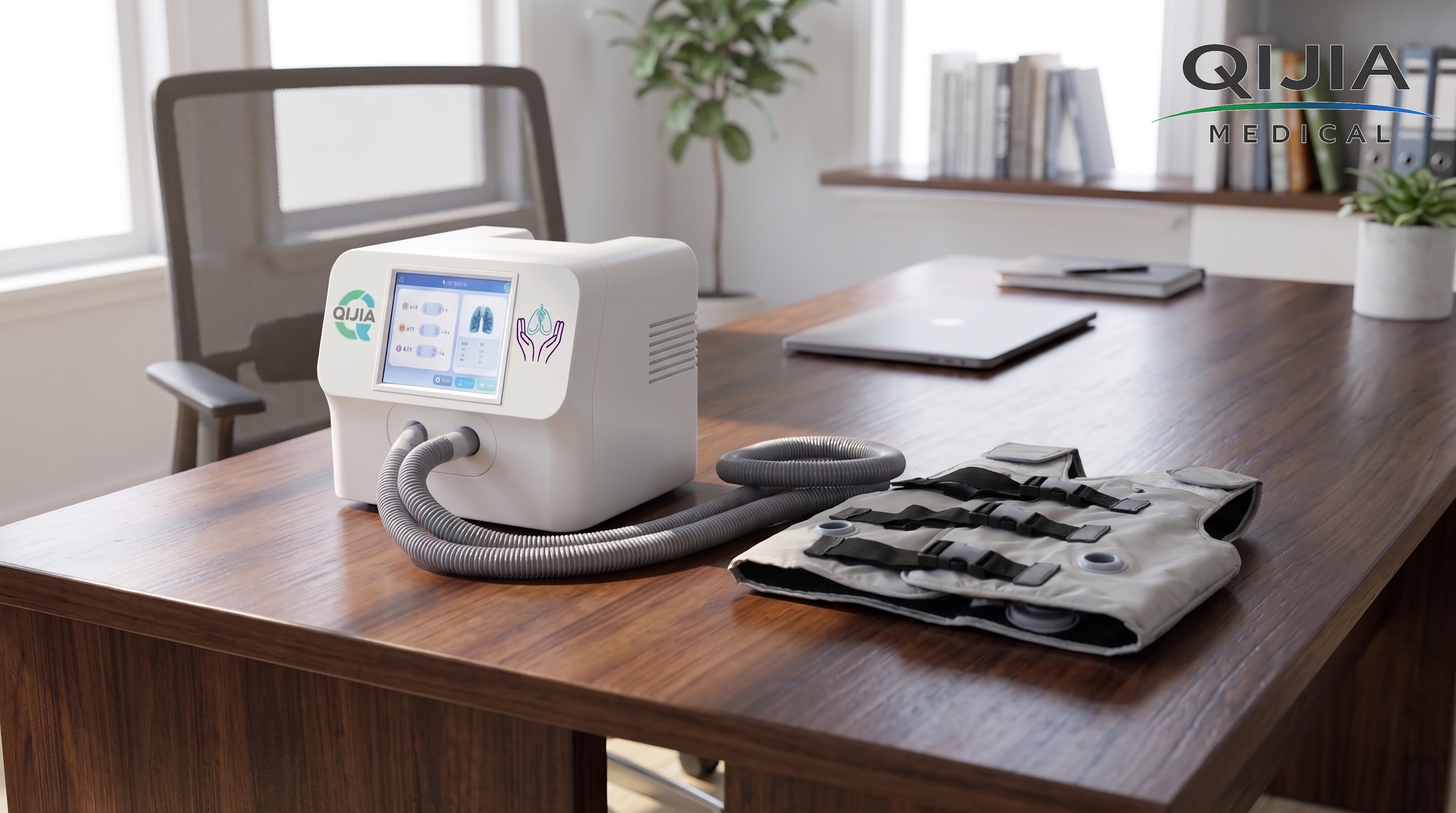
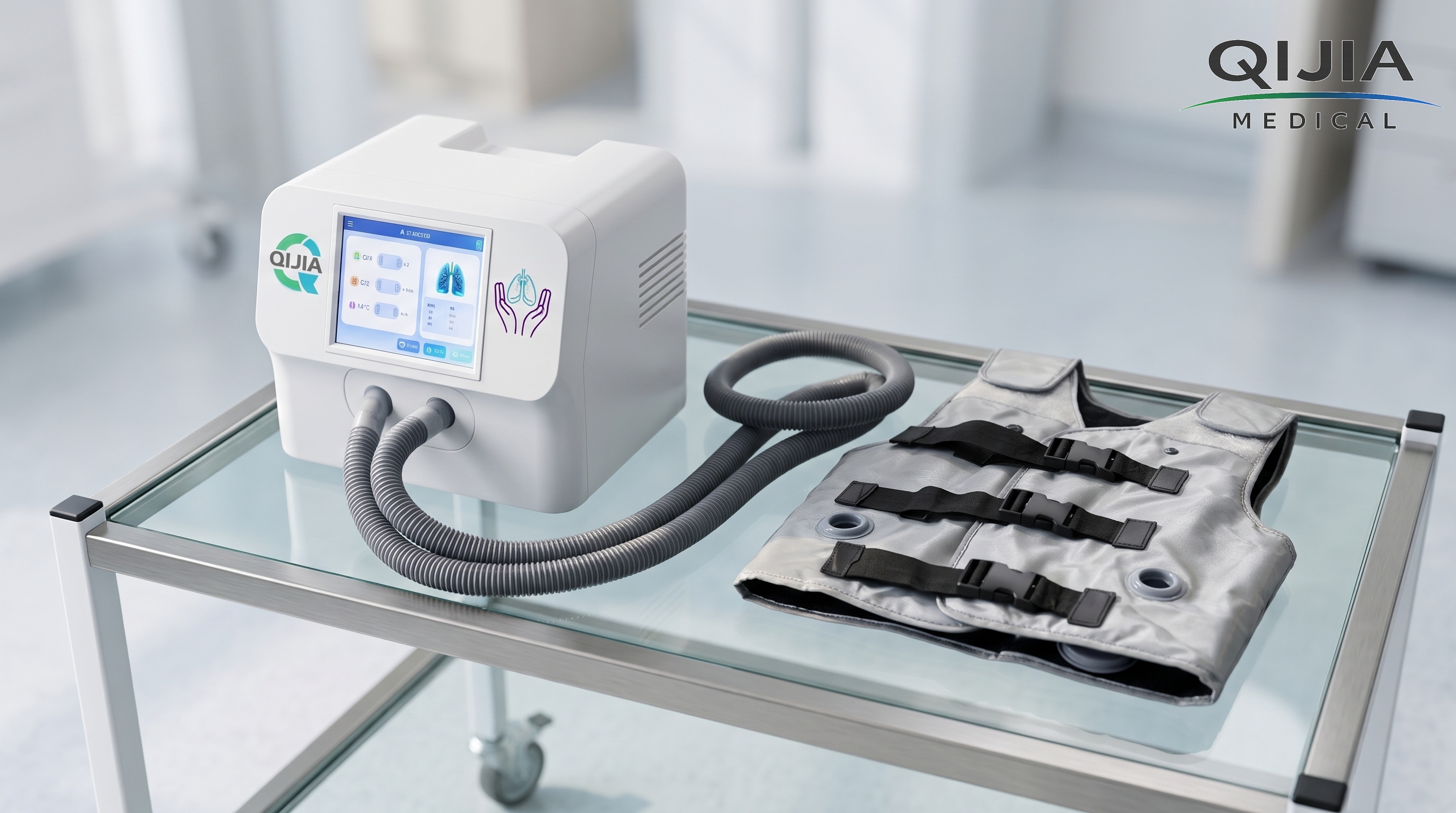
Our Airway Clearance System is based on High-Frequency Chest Wall Oscillation technology. The system consists of a control unit, an inflatable vest, and two connecting air hoses. During operation, the unit delivers repeated air pulses through the hoses, producing rhythmic inflation and deflation of the vest.
This controlled mechanical process provides an additional approach to mobilizing retained airway secretions as part of an appropriate respiratory care program.
For healthcare facilities, rehabilitation providers, and medical equipment distributors, HFCWO technology represents a distinct equipment category within the broader airway clearance market.
Explore our QIJIA Airway Clearance System (HFCWO) to learn more about our product range.
10. Medical Equipment Manufacturing and OEM/ODM Cooperation
Developing respiratory care solutions requires more than understanding the technology. Manufacturing capabilities, product configuration, quality management, and reliable technical support are also important considerations for medical equipment partners.
QIJIA MEDICAL integrates research and development with production, serving international customers across respiratory care, rehabilitation, and other medical equipment sectors.
Our company has obtained ISO13485, ISO9001, and CE-related certifications and supports regional distributors and business partners through OEM/ODM cooperation opportunities.
Whether you are a medical equipment distributor, healthcare supplier, or business developing a respiratory care product portfolio, we welcome discussions about product specifications, customization requirements, and potential cooperation.
Learn more about our manufacturing capabilities and customized services on the QIJIA MEDICAL About Us page.
For product information, technical discussions, or OEM/ODM inquiries, please contact our team.
Conclusion: Effective Airway Clearance Requires the Right Strategy
In critical care, retained airway secretions can create serious respiratory challenges. Mucus plugging, airway obstruction, atelectasis, and impaired gas exchange are important concerns, especially in patients who cannot cough effectively.
Conventional suctioning remains essential for removing accessible secretions, but it does not address every stage of mucus mobilization. HFCWO provides mechanical support for mobilizing retained mucus, MI-E assists patients with ineffective cough, and conventional chest physiotherapy offers additional secretion mobilization techniques.
These approaches have different purposes and should not be viewed as direct substitutes. In selected patients, combining appropriate techniques may help address multiple barriers to effective airway clearance.
As respiratory care continues to evolve, understanding the function and limitations of each technology is essential for making informed clinical and equipment decisions.
QIJIA MEDICAL — The Future of Smart Healthcare.
Frequently Asked Questions (FAQ)
1. What is the difference between airway suctioning and HFCWO?
Airway suctioning uses negative pressure through a catheter to physically remove accessible secretions. HFCWO uses repeated chest wall oscillations to help loosen and mobilize mucus toward larger airways. The two techniques address different stages of airway clearance and may be complementary.
2. Can HFCWO replace conventional suctioning?
No. HFCWO is designed to mobilize secretions, not directly suction them out of the respiratory tract. Patients who cannot cough effectively may still require suctioning or another method of secretion removal.
3. What is the difference between HFCWO and Cough Assist?
HFCWO uses an inflatable vest to generate chest wall oscillations that help mobilize mucus. Cough Assist, or MI-E, uses alternating positive and negative pressure to generate expiratory airflow and assist coughing. Their mechanisms and primary purposes are different.
4. Can HFCWO and Cough Assist be used together?
They may be used as complementary techniques in selected patients. HFCWO can help mobilize secretions, while MI-E can help patients with weak cough function expel them. The treatment sequence and suitability should be determined by qualified healthcare professionals.
5. Why can retained airway secretions be dangerous for ICU patients?
Retained mucus may narrow or obstruct airways, contribute to mucus plugging and atelectasis, and impair ventilation. In patients with limited respiratory reserves, these problems can complicate respiratory management and require additional interventions.
6. Is HFCWO suitable for mechanically ventilated patients?
HFCWO has been investigated in selected critically ill patients, including some receiving mechanical ventilation. However, evidence does not currently establish routine use for every ICU patient or clear benefits for major outcomes such as mortality and ventilation duration. Individual clinical assessment is essential.
7. What are the main airway clearance methods used in respiratory care?
Common approaches include airway suctioning, HFCWO, mechanical insufflation-exsufflation, postural drainage, manual chest percussion, and other respiratory physiotherapy techniques. The appropriate method depends on the patient's condition and specific secretion clearance needs.
8. Does QIJIA MEDICAL offer OEM/ODM cooperation for airway clearance equipment?
Yes. QIJIA MEDICAL supports OEM/ODM cooperation and customized medical equipment solutions. Interested distributors and business partners can contact our team to discuss product configurations, manufacturing requirements, and cooperation opportunities.
References
Blakeman TC, Scott JB, Yoder MA, Capellari E, Strickland SL. AARC Clinical Practice Guidelines: Artificial Airway Suctioning. Respiratory Care. 2022;67(2):258–271. View guideline.
Rossi V, et al. Physiological and clinical effects of selected airway clearance techniques in mechanically ventilated adult ICU patients: A systematic review and synthesis without meta-analysis. Critical Care. 2026;30:490. Read the review.
Airway clearance in patients with neuromuscular disease. 2024. Read the review.
Respiratory Management of Patients With Neuromuscular Weakness: An American College of Chest Physicians Clinical Practice Guideline and Expert Panel Report. CHEST. 2023. View guideline supplement.
Disclaimer: This article is intended for educational and informational purposes only. It does not replace professional medical assessment, clinical guidelines, or individualized treatment recommendations. Airway clearance techniques should be selected and performed by qualified healthcare professionals according to the patient's clinical condition and the relevant device instructions.